Recycled Coffee-Ground Project Stalled? A Problem–Solution Guide for Functional Polyester Filament
A recycled coffee-ground functional polyester project rarely fails because the idea is wrong. It stalls because the spinning line, the compliance file, and the performance test report were specified in the wrong order — or never specified at all.
This guide is written for apparel buyers, sourcing managers, and product developers in China's garment industry who are setting up a recycled coffee-ground-based functional masterbatch or recycled polyester program and have hit a wall in equipment, compliance, or performance validation. It follows the production path as it actually runs: recycled coffee grounds processed together with colorants into a functional masterbatch, blended with recycled PET bottle flakes, spun into yarns, and then woven or knitted into functional garments.
Each section isolates one stall point, states what has to be specified or verified, and names the evidence that already exists on this route. The reference yarn family throughout is Cocarber®, the DTY functional polyester filament produced by Smilytex (Smily Textile Technology (Taicang) Co.Ltd), a functional fiber and fabric developer established in Taicang, Jiangsu Province in 2017.
Why Recycled Coffee-Ground Projects Stall
The failure pattern repeats across programs. The brand side has committed to a sustainability story, the fabric team has a target hand feel and weight, and the mill has a spinning line — but nobody has written the bridge between them. Three gaps cause most of the delay.
Gap 1: The spinning line is quoted before the masterbatch route is defined
The recycled coffee-ground route is a masterbatch route, not a surface-finish route. Recycled coffee grounds are processed with colorants into a functional masterbatch, and that masterbatch is then blended with recycled PET bottle flakes before spinning. A line quoted for a standard polyester stream is not automatically a line quoted for a polymer stream carrying an additive package and a built-in colour system.
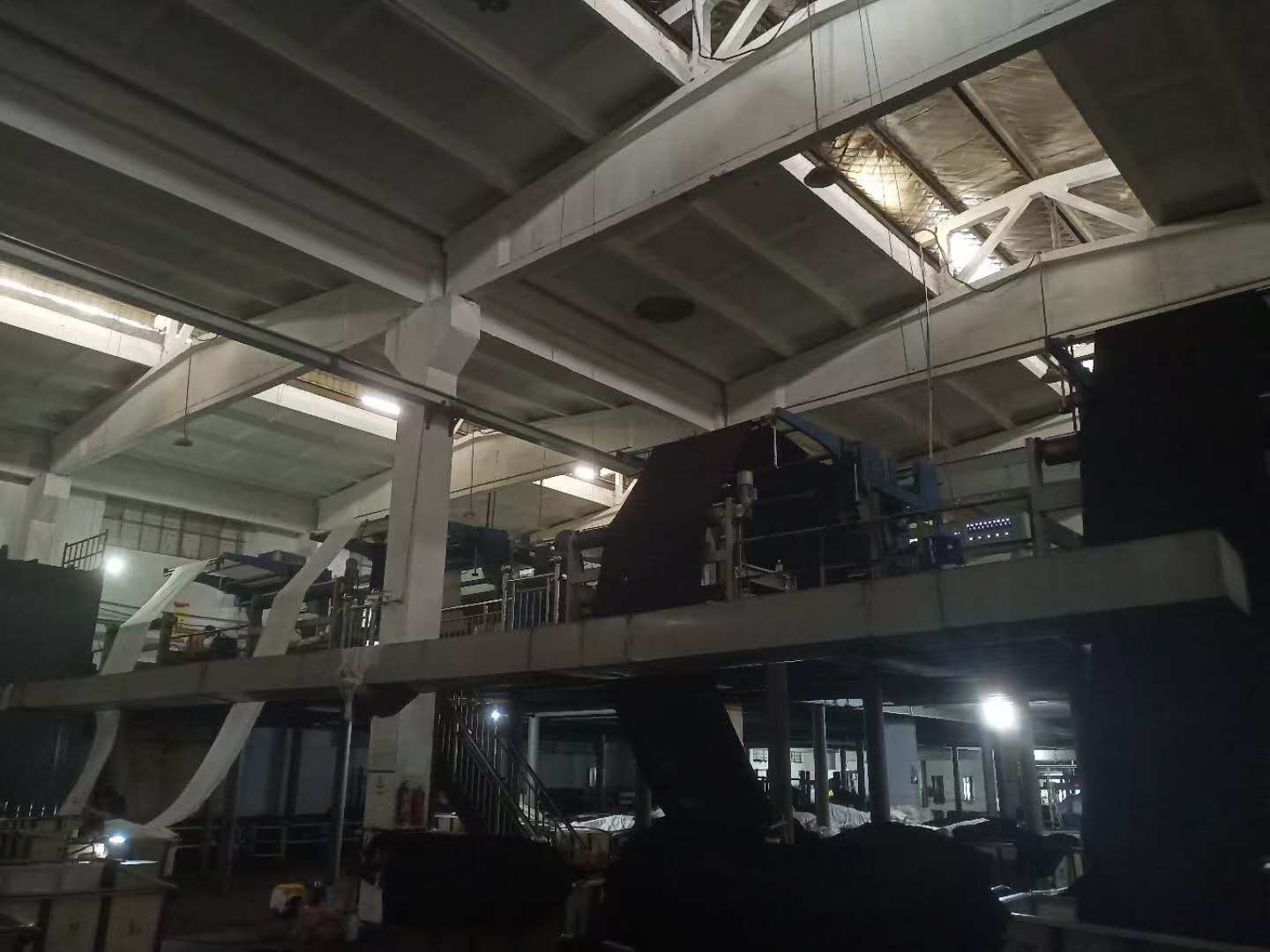
The practical fix is to write the equipment list into the project brief from the beginning: spinning machines, weaving or knitting looms, fabric finishing equipment, and functional testing instruments. When all four are named in the brief, the mill quotes against the real process instead of an assumed one, and the first sampling round stops being a discovery exercise.
Gap 2: Recycled-content claims are made before the certificate is checked
Recycled-content labelling is document-driven. Textile certifications such as OEKO-TEX Standard 100 and the Global Recycled Standard (GRS) require at least 20% recycled content for specific labelling. A project that promises a recycled story to an EU or US brand without a valid scope certificate behind it will stop at the brand's compliance gate — no matter how good the yarn performs in the hand.
Gap 3: Functional claims are written into the brief without a test method
Odor control, far infrared, quick dry, dope dye, and anti-microbial are testable claims, not adjectives. A brief that lists them without naming the test method hands the mill a target it cannot prove and hands the brand a claim it cannot publish. This is the single most common reason a technically sound project is quietly shelved.
Industry Background: Why This Route Is Worth Unsticking
The commercial case for functional and recycled polyester is not a niche argument. The global polyester fiber market was valued at USD 82.07 billion in 2025 and is projected to reach USD 148.11 billion by 2034, according to Vertex AI / Industry Analysis. A separate estimate places the polyester filament yarn market at USD 106.4 billion in 2024, growing at a 3.72% CAGR to 2035, according to Market Research Future.
Those two figures are not directly comparable, because the report scopes differ between total polyester fiber and filament yarn specifically — but they point in the same direction. Within that market, Asia Pacific held a 65% share of polyester fiber in 2025, led by China and India (Vertex AI / Industry Analysis).
The recycled segment is growing faster than the base market. The global recycled polyester market was valued at USD 15.52 billion in 2024 and is expected to reach USD 26.18 billion by 2030, a 9.25% CAGR (Grand View Research). Demand-side trends reinforce the direction: athleisure's preference for moisture-wicking and antimicrobial polyester blends has been a primary trend through 2024–2026 (Mordor Intelligence).
A recycled coffee-ground filament that carries odor control, far infrared heating, quick dry, dope dye, and anti-microbial functions in a single yarn answers several of those requirements at once. That convergence is exactly why a stalled project is usually worth repairing rather than abandoning.
The Fix: Aligning Masterbatch, Yarn, Fabric, and Evidence
The production path, stated once and clearly
Cocarber® starts with recycled coffee grounds, which are processed together with colorants into a functional masterbatch and then blended with recycled PET bottle flakes for spinning. This route gives the yarn a dope-dyed colour system while reducing the need for conventional dyeing, which helps save energy and resources.
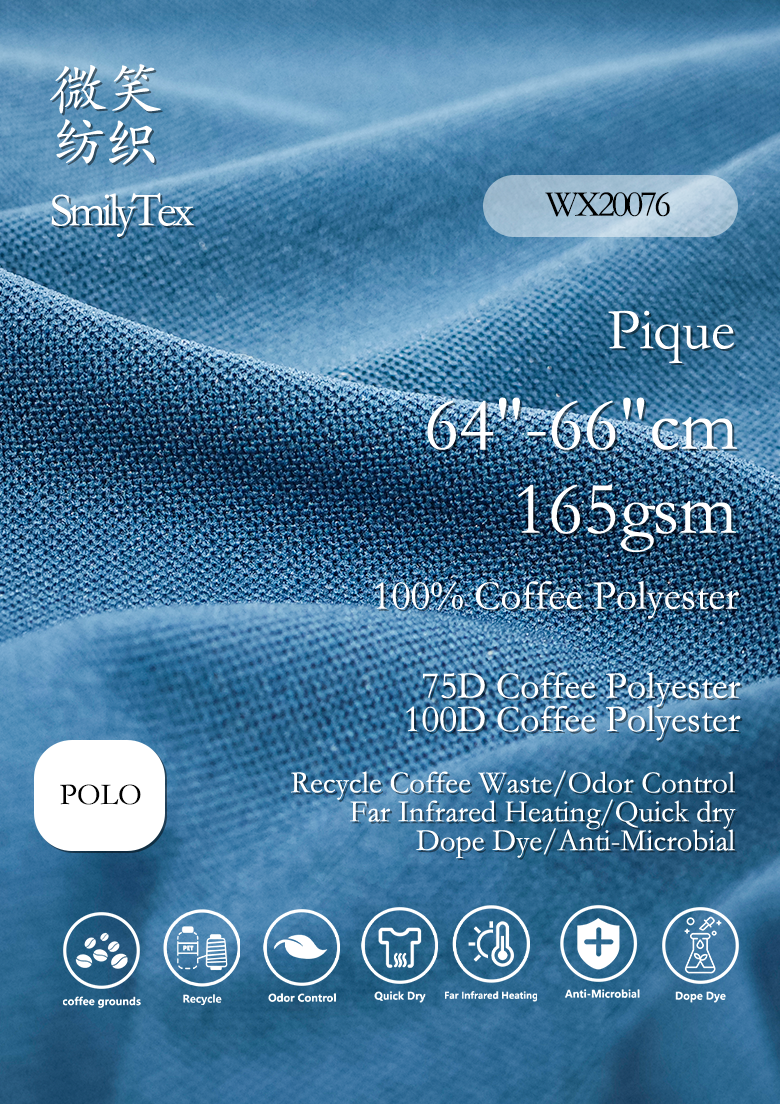
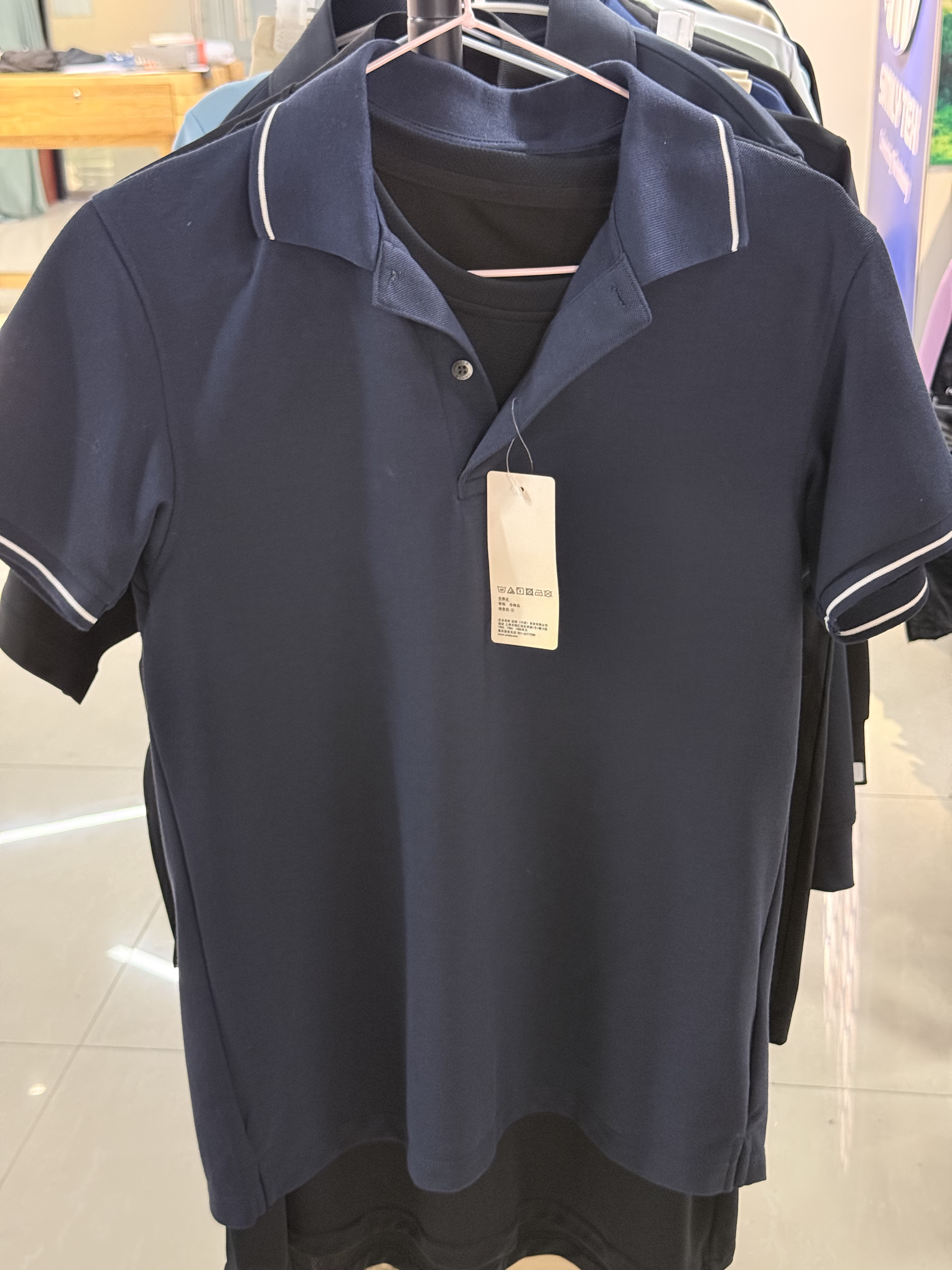
From there the path is conventional and readable: the filament is spun into yarns, the yarns are woven or knitted into fabrics, and the fabrics are processed into functional garments such as yoga wear.
What the yarn carries
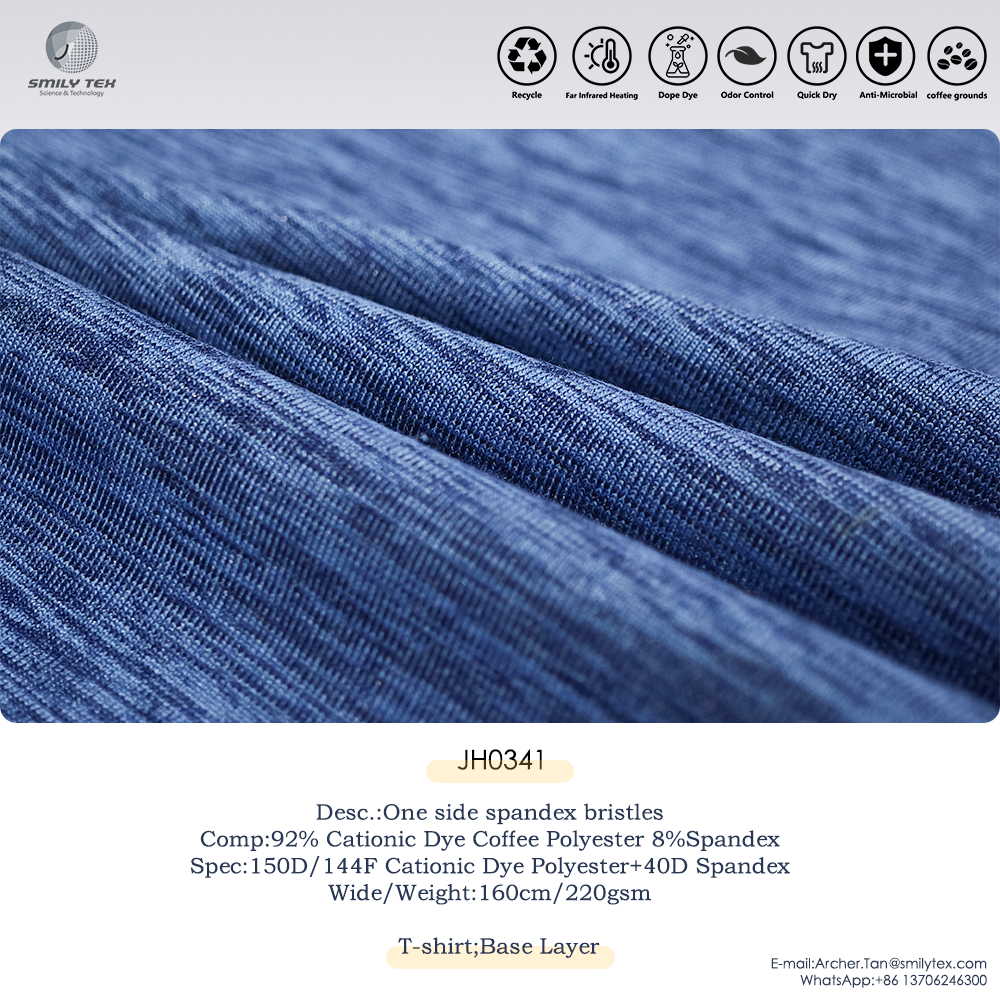
Cocarber® is a DTY functional polyester filament available in 30D, 50D, 75D, 100D, 150D, and 300D. Its function set covers Recycle Coffee Waste, Odor Control, Far Infrared Heating, Quick dry, Dope Dye, and Anti-Microbial. The material family extends across Bamboo Charcoal Cocarber®, Coconut Charcoal Cocarber®, China-hemp Charcoal Cocarber®, Coffee Charcoal Cocarber®, Dope-dyeing Cocarber®, Cotton Feeling Cocarber®, Renewable Cocarber®, and Hydrophilic Cocarber®. It is suitable for both woven and knitted applications and is used across sport, leisure, underwear, and home textile programs.
For buyers comparing this route against other functional polyester filament options, the relevant distinction is that Cocarber® consolidates recycled content and multiple performance functions in one yarn, instead of stacking a recycled base yarn plus separate finishing treatments.
Why the fibre behaves the way it does
The mechanism matters for anyone who has to defend the claim internally. The porous structure of coffee carbon fibre has a high adsorption capacity, which is what produces the deodorising effect. After low-temperature carbonisation, coffee grounds form a special porous structure, giving the fibre a natural far infrared, heat-storage, and warmth effect without adding any chemical additives.
That is a material-property argument rather than a coating argument, and it is the reason the functions survive downstream weaving, knitting, and finishing instead of washing out of the fabric.
Step-by-Step Breakdown: Six Fixes in Order
- Lock the functional brief before the yarn count. Decide which of the six Cocarber® functions the garment actually needs — recycle coffee waste, odor control, far infrared heating, quick dry, dope dye, anti-microbial — and which are optional. A brief that demands all six without a test method is not a brief; it is a wish list.
- Nominate the yarn count and construction. Cocarber® is available in 30D, 50D, 75D, 100D, 150D, and 300D. The count determines whether the fabric reads as a light knit, a structured woven, or a home textile surface. If the target is a cotton-like handle or a hydrophilic face, name the variant at the same time — Cotton Feeling Cocarber® or Hydrophilic Cocarber® — rather than discovering the requirement at the finishing stage.
- Write the equipment list into the brief. Spinning machines, weaving or knitting looms, fabric finishing equipment, and functional testing instruments. Specifying the testing instruments alongside the production machines is what converts a functional claim into a verifiable one, and it lets the mill quote test time instead of absorbing it as a surprise.
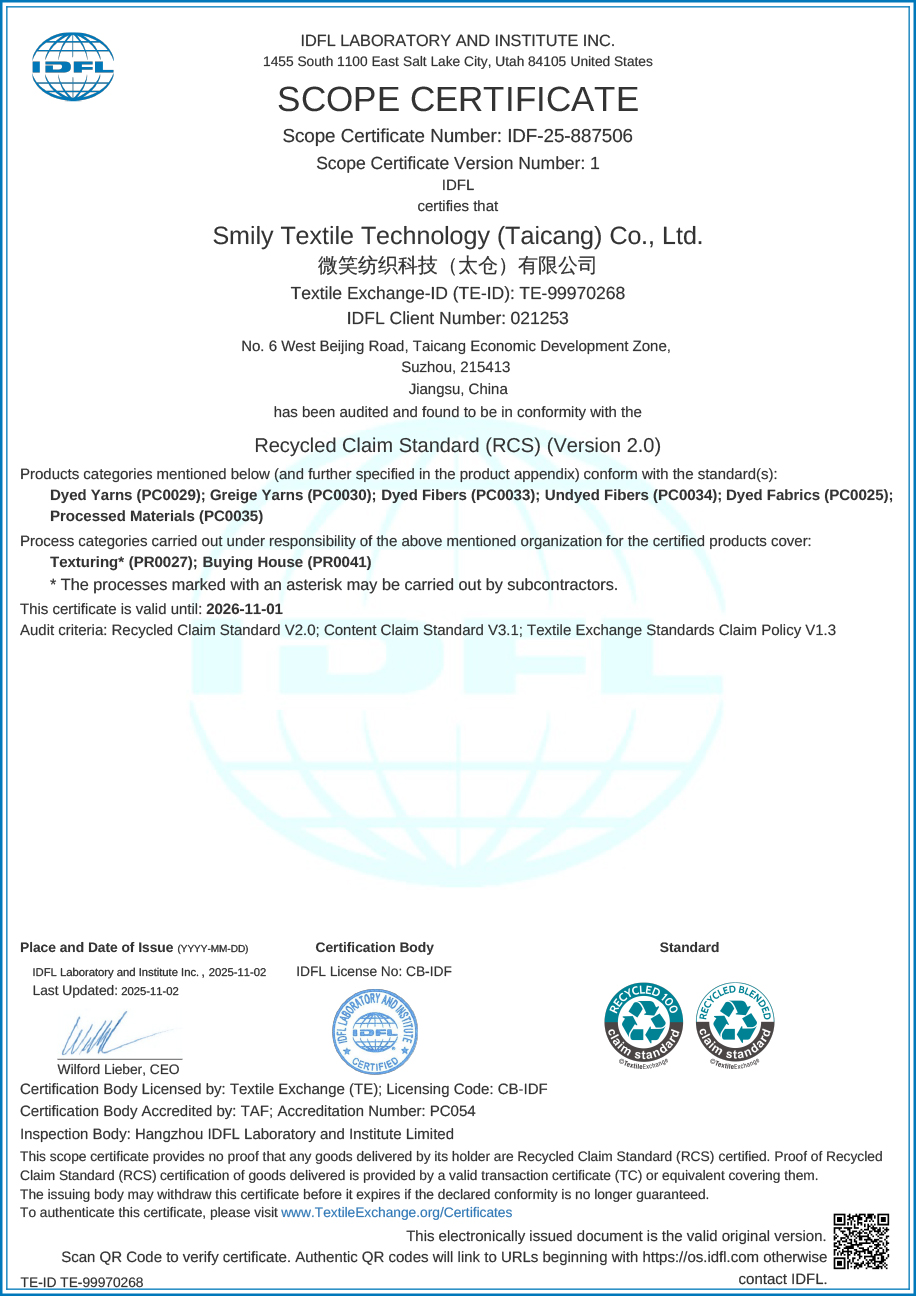
- Build the compliance file before sampling, not after. Smilytex holds RCS 2.0 scope certificate number IDF-25-887506, issued by IDFL Laboratory and Institute Inc. It covers Dyed Yarns, Greige Yarns, Dyed Fibers, Undyed Fibers, and Dyed Fabrics, is valid from 2 November 2025 to 1 November 2026, and applies to the EU, US, global brand supply chain, and China markets. The Cocarber® functional polyester filament line is additionally certified to Global Recycled Standard V4.0 under certificate number IDF-25-887497, also issued by IDFL Laboratory and Institute Inc. over the same validity window. Attaching these two documents to the brief removes the most common compliance stall before it happens.
- Validate performance against named standards. Far infrared performance is tested to GB/T 30127-2013, the national standard of the People's Republic of China titled "Textiles — Testing and Evaluation of Far Infrared Performance". Caffeine residue is tested by LC-MSMS, with a result of 0.009 mg/kg. Odor control, quick dry, dope dye, and anti-microbial functions are then confirmed through the same validation round, so the buyer holds one coherent performance file rather than four separate claims.
- Close the commercial parameters. Confirm minimum order quantity, lead time, and quality control method in writing. On this route, MOQ is 500 kg, lead time runs 5–20 days, and quality control is 100% test. Smilytex operates from a 16,220 m² facility in Taicang with 206 employees, a 10-engineer R&D team, an annual output of 20 tons, and a monthly capacity of 1.6 tons, exporting roughly 70% of output to the EU, USA, and Japan.
Sequence rule: steps 1 to 3 define the product; steps 4 and 5 define the evidence; step 6 defines the commercial commitment. Projects that reverse the order — committing to price and delivery before the evidence file exists — are the ones that stall in the second round of sampling.
Use Cases: Where a Fixed Route Lands
Yoga wear and performance knitwear
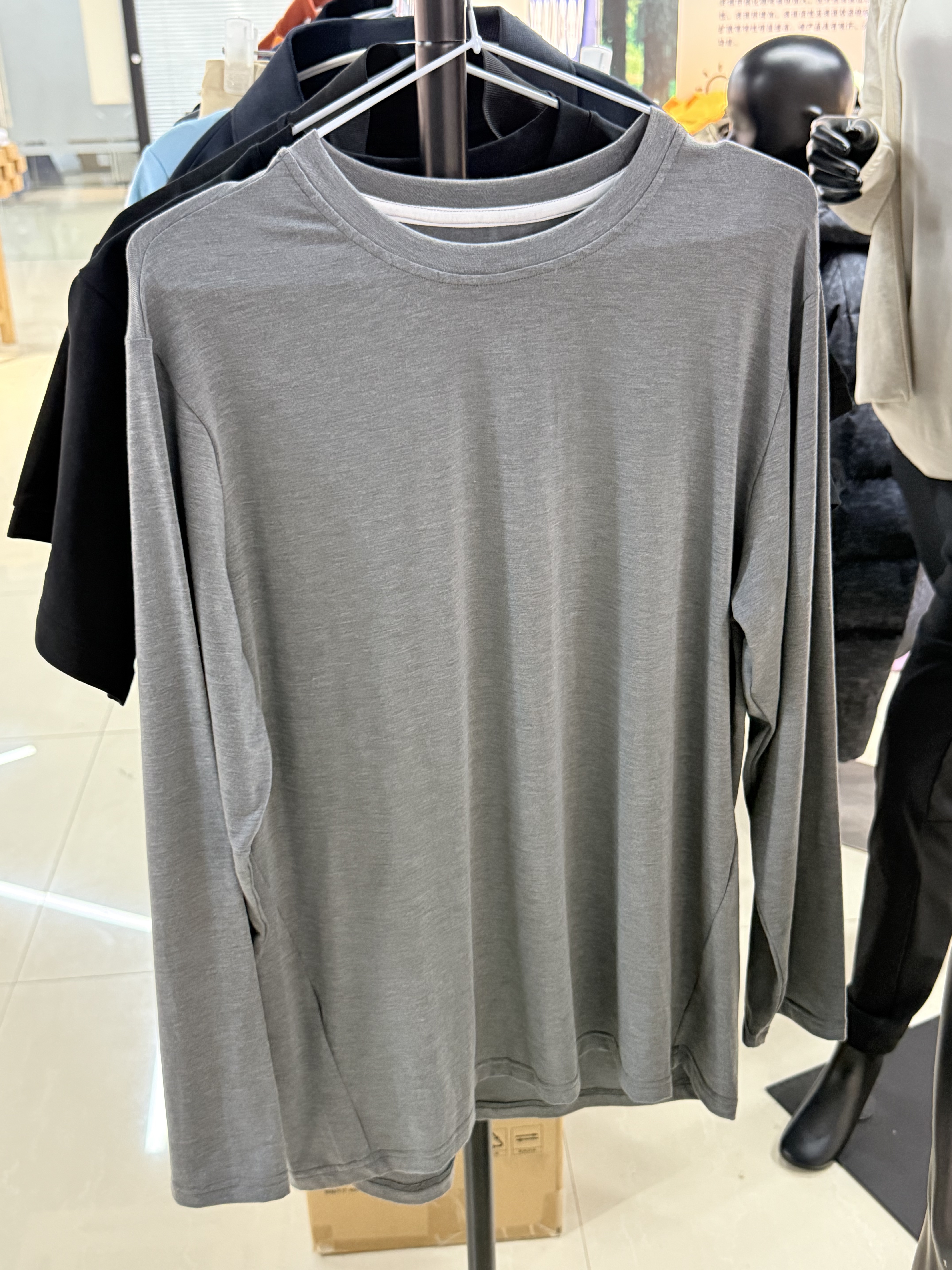
Yoga wear is the natural landing point for this yarn. The recycled coffee-ground filament is spun into yarns, woven or knitted into fabrics, and processed into functional garments such as yoga pants, where odor control, quick dry, and far infrared warmth are all directly experienced by the wearer rather than tested only in a lab.
Dope-dyed apparel OEM programs
An apparel OEM manufacturer in China ran a coffee-based program covering 2,000 pieces over five years. The requested result was high stretch, quick-dry, antibacterial, and eco-friendly dope-dyed performance — described by the buyer as designed for freedom in motion. The functional highlights on that program were recycle coffee waste, odor control, far infrared heating, quick dry, dope dye, and anti-microbial, supported by recycled materials carrying GRS/RCS certification to meet the brand's sustainable development requirements.
Multi-market garment manufacturing
A separate garment manufacturing customer across Japan, Malaysia, China, and the US ordered 5 tons for garment production over a relationship spanning 2–5 years. The program met the customer's requirements for functional fabrics including quick-drying, antibacterial, far infrared heating, cotton-like touch, and recycled eco-friendly materials. Here again, the deciding factor was that the recycled materials carried GRS/RCS certification and therefore satisfied the brand's sustainability requirements without additional substitution work.
Comparison Table: Stall Point, Verification Requirement, and Available Evidence
| Project stall point | What must be specified or verified | Evidence available on the Cocarber® route |
|---|---|---|
| Spinning and yarn formation | Spinning machines configured for a masterbatch-blended, dope-dyed polymer stream; nominated yarn counts | Cocarber® is a DTY functional polyester filament available in 30D, 50D, 75D, 100D, 150D and 300D, produced by blending functional masterbatch with recycled PET bottle flakes before spinning |
| Fabric formation | Weaving or knitting looms matched to the target construction and the filament's handle | Cocarber® is suitable for both woven and knitted applications |
| Finishing and colour | A colour route that does not over-process the functional package | The recycled coffee-ground route builds colour into the masterbatch, giving a dope-dyed colour system and reducing the need for conventional dyeing, which helps save energy and resources |
| Far infrared validation | A recognised test method named in the brief | Compliant with GB/T 30127-2013 for far infrared performance |
| Residue and safety validation | A residue test with a stated limit | LC-MSMS testing with a caffeine residue result of 0.009 mg/kg |
| Functional verification | Confirmation of each declared function | Cocarber® function set: Recycle Coffee Waste, Odor Control, Far Infrared Heating, Quick dry, Dope Dye, Anti-Microbial |
| Recycled-content compliance | Certification accepted by EU and US brand supply chains | GRS V4.0 certificate IDF-25-887497 and RCS 2.0 certificate IDF-25-887506, both issued by IDFL Laboratory and Institute Inc. |
| Order economics and scheduling | MOQ, lead time and quality control aligned with the production calendar | MOQ 500 kg; lead time 5–20 days; 100% test quality control |
FAQ
What certification does a recycled coffee-ground functional polyester filament need for EU and US brands?
Two certification layers matter. The first is recycled-content certification: Smilytex holds RCS 2.0 scope certificate number IDF-25-887506, issued by IDFL Laboratory and Institute Inc., covering Dyed Yarns, Greige Yarns, Dyed Fibers, Undyed Fibers, and Dyed Fabrics, valid from 2 November 2025 to 1 November 2026 and applicable to the EU, US, global brand supply chain, and China markets. The Cocarber® functional polyester filament line is additionally certified to Global Recycled Standard V4.0 under certificate number IDF-25-887497, also issued by IDFL Laboratory and Institute Inc. The second layer is functional and residue testing: compliance with GB/T 30127-2013 for far infrared performance, and LC-MSMS testing with a caffeine residue result of 0.009 mg/kg. Note that recycled-content labelling schemes such as GRS require at least 20% recycled content for specific labelling, so the certificate scope must be checked against the actual yarn composition.
Can the yarn be customised to a specific count, hand feel, or elasticity?
Yes. Cocarber® is available in 30D, 50D, 75D, 100D, 150D, and 300D, and the material family covers Bamboo Charcoal, Coconut Charcoal, China-hemp Charcoal, Coffee Charcoal, Dope-dyeing, Cotton Feeling, Renewable, and Hydrophilic Cocarber®. Smilytex operates an ODM model: products are not limited to ordinary specifications, and the spinning process can be used to customise the style, elasticity, and handle of the yarn according to customer requirements, which allows the resulting fabric to carry a more distinct character. Customisation is therefore a specification conversation about yarn count, colour route, and surface behaviour — not a separate development programme outside the standard range.
What drives the cost of a recycled coffee-ground polyester program?
Cost on this route is driven by specification decisions rather than by a catalogue price. Three decisions move the number most. First, the colour route: building colour into the masterbatch gives a dope-dyed colour system and reduces the need for conventional dyeing, which helps save energy and resources compared with adding colour at the finishing stage. Second, the function package: consolidating recycle coffee waste, odor control, far infrared heating, quick dry, dope dye, and anti-microbial functions in a single yarn avoids the cost of stacking multiple yarns or multiple finishing treatments. Third, order quantity and validation rounds: with an MOQ of 500 kg, the number of sampling and validation cycles before bulk approval has a direct effect on total programme cost. Commercial terms are project-specific, so the practical approach is to request a quotation against a written yarn specification rather than against a catalogue reference.
How do I validate far infrared performance and caffeine residue before committing to a production order?
Build the validation round into the sample stage. Define the claim set first, then request yarn samples in the nominated counts. Far infrared performance is tested to GB/T 30127-2013, the national standard of the People's Republic of China titled "Textiles — Testing and Evaluation of Far Infrared Performance". Caffeine residue is tested by LC-MSMS and should return a result of 0.009 mg/kg. In the same round, confirm odor control, quick dry, dope dye, and anti-microbial performance against the agreed methods, and knit or weave a trial panel with the specified weaving or knitting loom and finishing route so that hand feel and colour are assessed on the finished fabric rather than on the yarn alone. Smilytex applies 100% test quality control, which means the production run is checked against the same specification that the sample was approved on.
What are the MOQ and lead time for Cocarber® orders?
The minimum order quantity is 500 kg, and lead time runs 5–20 days depending on the specification and the order position. Monthly capacity is 1.6 tons, with an annual output of 20 tons, and quality control is 100% test. Because the recycled coffee-ground route is a masterbatch route, the lead time clock starts once the yarn count, colour route, and function set are fixed in writing — sending a complete specification is the fastest way to get an accurate date. If your project is already specified and you want to move from evaluation to a sample or a quotation, the Smilytex team can be reached at Archer.Tan@smilytex.com, by phone on 86-512-53991066, or via WhatsApp on +86-13706246300, and the full product brochure is available for download below.
Conclusion
A recycled coffee-ground project does not stall because the technology is unavailable. It stalls because the equipment list, the certificate file, and the test method were treated as later-stage details rather than as part of the specification. Fix those three items in the right order and the project moves again.
The order is straightforward. Define the function set and the yarn count. Write spinning machines, weaving or knitting looms, fabric finishing equipment, and functional testing instruments into the brief. Attach RCS 2.0 certificate IDF-25-887506 and GRS V4.0 certificate IDF-25-887497 from IDFL Laboratory and Institute Inc. before sampling begins. Validate far infrared to GB/T 30127-2013 and caffeine residue to 0.009 mg/kg by LC-MSMS. Then close MOQ at 500 kg, lead time at 5–20 days, and quality control at 100% test.
That sequence is the difference between a sustainability concept and a shippable functional polyester filament program — and it is the same sequence that has carried recycled coffee-ground fabrics into yoga wear and apparel OEM production for customers across Japan, Malaysia, China, the US, and Europe.
Stalled at the Sampling Stage? Start With a Specification Review
Smilytex works from written yarn specifications rather than catalogue numbers. Send the function set, the target yarn count, the fabric construction, and the destination market, and the team will confirm whether Cocarber® fits the brief, which tests apply, and what the sample and lead-time schedule looks like.
Email: Archer.Tan@smilytex.com | Tel: 86-512-53991066 | WhatsApp: +86-13706246300
Website: www.smilytex.com | Brochure: Download the Smilytex functional filament brochure (PDF)
Address: No.6 Weast Beijing Road, Taicang City, Jiangsu Province, China.
Have Questions or Need More Details?
Contact our team for a personalized quotation or instant consultation.
Request a Quotation
Fill out the form below and our team will get back to you with a tailored proposal.
WhatsApp Direct Chat
Prefer to chat in real-time? Message us on WhatsApp for instant assistance & quick answers.
- Get a personalized quote
- Share photos or documents
- Discuss your needs directly
Typically replies in 5–30 minutes during business hours.