
How to Launch a Coffee Charcoal Antibacterial Polyester Filament Project: Application Guide
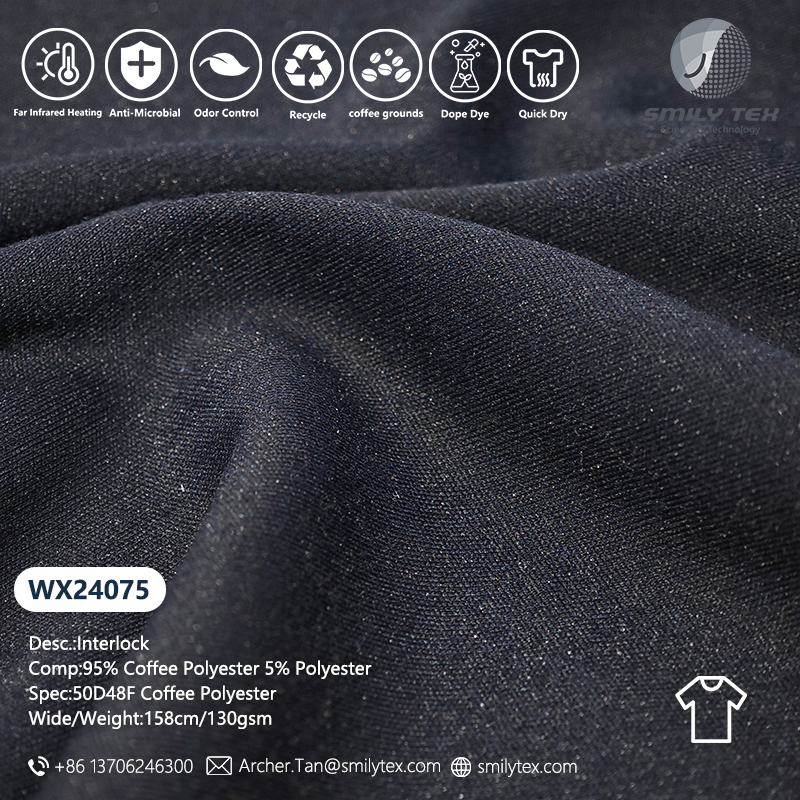
Cover: Cocarber® WX24075-3 — coffee charcoal antibacterial polyester filament supplied by Smilytex.
Short answer: a coffee charcoal antibacterial polyester filament project is built in six controlled stages — carbonising spent coffee grounds, compounding them with colorants into a functional masterbatch, blending that masterbatch with recycled PET bottle flakes, melt-spinning the blend into filament yarn, converting the yarn into knitted or woven fabric, and validating the finished fabric against named test standards. In China, the commercial reference for this route is Cocarber®, a functional polyester filament family from Smily Textile Technology (Taicang) Co., Ltd. (Smilytex), a Taicang-based developer and supplier of functional fiber and functional fashion fabrics established in 2017.
Cocarber® combines coffee-waste recycling with odor control, far-infrared heating, quick drying, dope dyeing and anti-microbial functions. Available counts run from 30D to 300D, and the yarn is positioned for both woven and knitted constructions in sport, leisure, underwear and home textile applications. This guide converts that product statement into a project plan a textile team can execute, including the two test anchors that decide whether the project passes or stalls: GB/T 30127-2013 for far-infrared performance and LC-MSMS testing for caffeine residue at 0.009 mg/kg.
Problem Definition: Where Coffee-Charcoal Projects Stall
Coffee-ground functional filament is not a single material purchase; it is a process chain. Projects rarely fail because the idea is wrong. They fail because one link in the chain is decided before the link it depends on.
Feedstock and masterbatch are treated as one variable. Recycled coffee grounds and the functional masterbatch are separate inputs with separate acceptance criteria. When a team specifies only “coffee charcoal yarn”, the spinning partner is free to interpret the additive load, particle dispersion and carrier system — and the resulting fabric may not repeat from lot to lot.
Colour is decided too late. In a dope-dyed route, colour enters at the masterbatch stage, not at the dyehouse. A shade approved after spinning forces either a re-spin or a conventional dyeing step that the dope-dye route was designed to reduce.
Functional claims precede the test protocol. Far-infrared performance and caffeine residue are measurable properties with named methods. If the test method is agreed after bulk production, a failing result has no commercial remedy. The Cocarber® route is specified against GB/T 30127-2013 and LC-MSMS caffeine residue testing at 0.009 mg/kg precisely so the acceptance criterion exists before the first lot.
Recycled-content certification is confused with functional performance. RCS and GRS certify recycled material and chain of custody; they say nothing about odor control, warmth or antimicrobial behaviour. A project needs both documents, evaluated separately.
Yarn count is chosen before fabric construction. A 30D yarn and a 300D yarn do not solve the same design problem, and a knit and a woven end-use place different demands on the same function set.
Scale-up expectations ignore stated commercial parameters.Smilytex states a minimum order quantity of 500 kg, a lead time of 5–20 days and a monthly capacity of 1.6 tons for its functional filament programme. A launch plan that assumes otherwise creates a schedule problem that no amount of yarn performance can fix.
Industry Background: Why This Route Exists Now
Polyester filament remains the volume base of performance apparel. The global polyester filament yarn market was valued at USD 104.80 billion in 2024 according to Spherical Insights, and the recycled polyester segment is projected to reach USD 26.18 billion by 2030, growing at a 9.25% CAGR according to Grand View Research. Both figures are commercial market estimates, but they describe the same commercial pressure: buyers want recycled content and performance function in the same yarn, not in two separate programmes.
The coffee-ground route answers that pressure in a specific way. Spent coffee grounds are a waste stream that is carbonised and converted into a functional additive, then carried into a polyester filament that also uses recycled PET bottle flakes as polymer feedstock. The yarn therefore sits inside a recycled-material narrative, but the evidence for it splits into two independent tracks that buyers must request separately.
Track one — recycled content and chain of custody. The Recycled Claim Standard and the Global Recycled Standard provide third-party certification criteria for recycled materials and chain of custody, and GRS adds processing, social, environmental and chemical requirements on top. GRS also sets a minimum recycled content threshold of 50% for consumer-facing labelling. A coffee-waste additive is not automatically certified recycled content, so the certificate scope has to be read line by line rather than assumed.
Track two — functional performance. Odor control, far-infrared heating, quick drying and anti-microbial behaviour are performance claims. They are only comparable between suppliers when the test method, the laboratory and the fabric construction are stated. That is why the launch sequence in this guide places the test protocol before bulk production and the certificate review beside it, not instead of it.
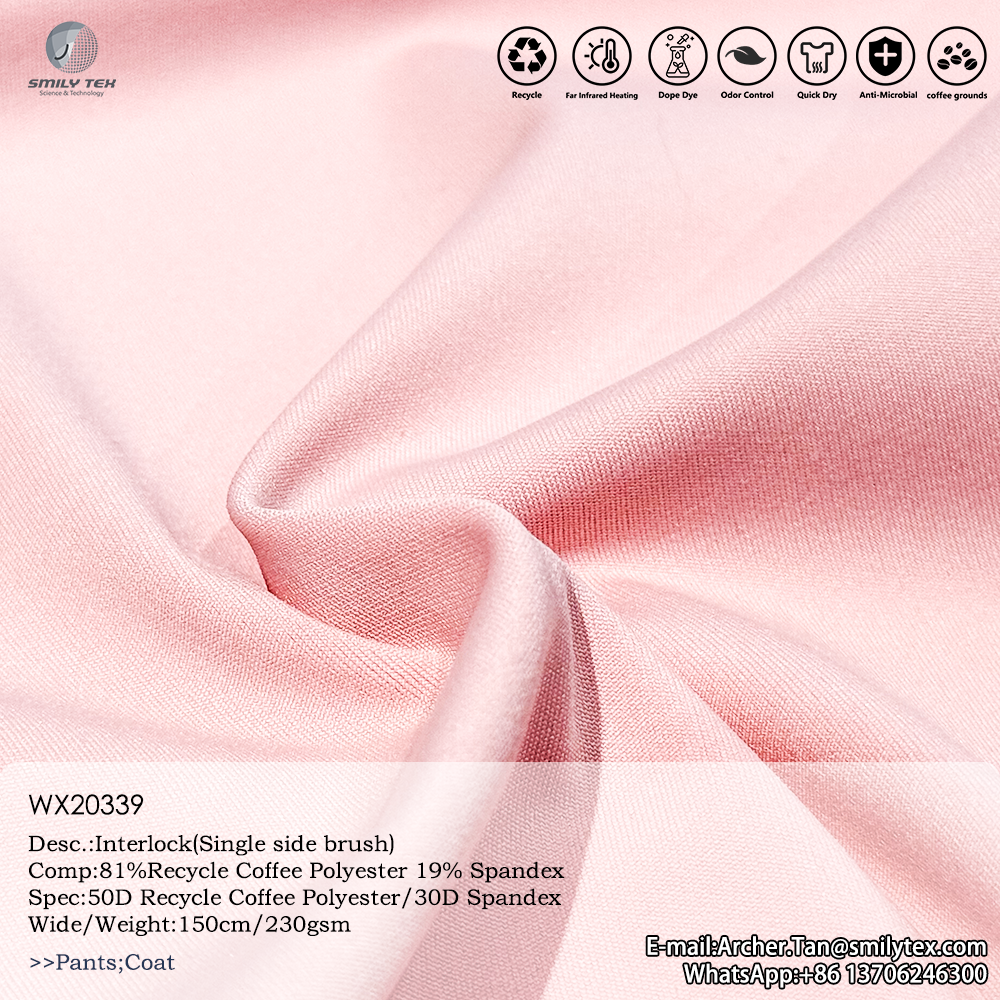
Cocarber® WX20339 — dope-dyed coffee charcoal polyester filament, one of the shades used to validate a project shade card.
Detailed Solution: How the Cocarber® Route Works
Cocarber® starts with recycled coffee grounds, which are processed together with colorants into a functional masterbatch and then blended with recycled PET bottle flakes for spinning. This is the defining process fact of the route, and everything else in the project plan follows from it.
Masterbatch stage. Coffee grounds and colorants are combined into a functional masterbatch. Colour and function are introduced together, which is why the shade card and the function specification have to be approved at the same meeting rather than in sequence.
Spinning stage. The masterbatch is blended with recycled PET bottle flakes and spun into filament yarn. Because the colour system is built into the polymer rather than applied later, the yarn carries a dope-dyed colour while reducing the need for conventional dyeing, which helps save energy and resources.
Function mechanism. The porous structure of coffee carbon fibre provides high adsorption, which is how the deodorisation effect is achieved. After low-temperature carbonisation, the coffee grounds form a special porous structure, giving the fibre a natural far-infrared, heat-storage and warmth-retention effect without adding any chemical additives. In use, the fibre absorbs and reflects infrared rays emitted by the human body, so the fibre itself generates heat, compensates for heat loss to the external environment and helps maintain a relatively stable body temperature.
Portfolio variants. The Cocarber® family is not a single yarn. The material range covers bamboo charcoal, coconut charcoal, China-hemp charcoal and coffee charcoal variants, plus dope-dyeing, cotton-feel, renewable and hydrophilic versions. For a coffee-charcoal project, only the coffee-charcoal variant is the subject of the specification; the other variants exist so that a buyer who later shifts the story — for example to a different charcoal source — does not have to restart the qualification.
Step-by-Step Breakdown: Launching the Project
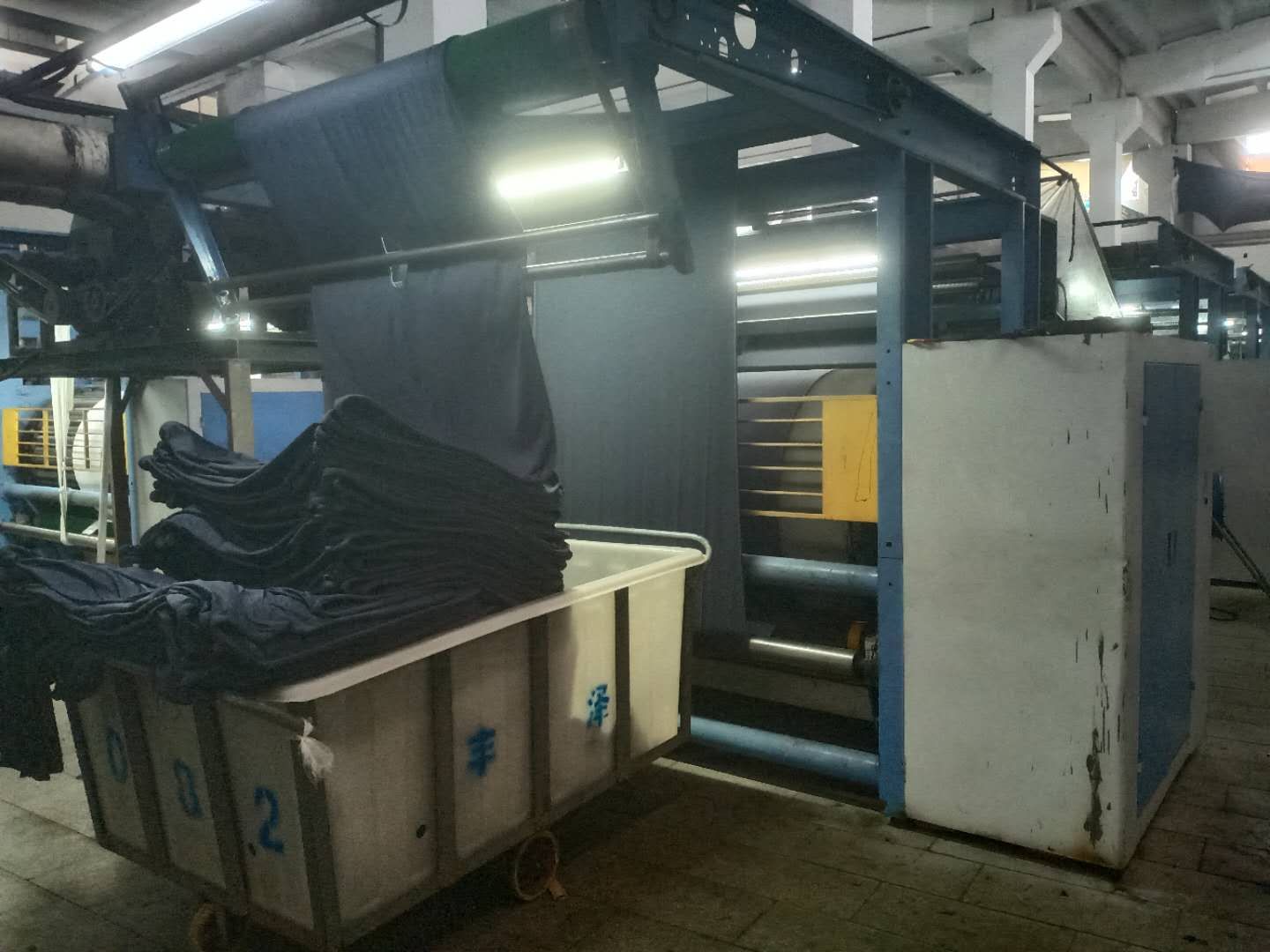
Production environment at Smily Textile Technology (Taicang) Co., Ltd., where functional filament programmes are developed and supplied.
Step 1 — Define the function set and the end use
Write down which functions the garment actually needs before any yarn is quoted. The Cocarber® function list is broad — recycled coffee waste, odor control, far-infrared heating, quick drying, dope dye and anti-microbial — and specifying all six for a product that only needs two makes sampling slower and testing more expensive. The end use decides the priority: underwear and home textile lean on odor control and anti-microbial behaviour, while sport and leisure outer layers benefit more from far-infrared warmth and quick drying.
Step 2 — Fix the feedstock-to-masterbatch route
Confirm in writing that the yarn is made by processing recycled coffee grounds together with colorants into a functional masterbatch, and that this masterbatch is blended with recycled PET bottle flakes before spinning. A supplier that cannot describe this route at process level cannot guarantee batch-to-batch consistency, and the buyer has no basis for a repeat order.
Step 3 — Approve colour at the masterbatch stage
Because colour is introduced with the functional additive, the shade card is a masterbatch decision. Approve shades against the target fabric, not against a yarn cone alone, and record the light source used for visual assessment. Deciding this late converts a dope-dye advantage into an extra dyeing cost.
Step 4 — Match denier to fabric construction
Cocarber® is available in 30D, 50D, 75D, 100D, 150D and 300D. Light counts suit fine-gauge knits and lightweight wovens; heavier counts suit structured knits, outerwear and home textile. Both woven and knitted applications are supported, so the choice should follow the fabric engineer's construction plan rather than the nearest available count.
Step 5 — Spin, then lock the consistency checks
Spinning carries the masterbatch into filament. Agree the inspection points at this stage: what is tested, how often, and which result triggers a hold. Smilytex states 100% testing as part of its quality control for this programme, which is the minimum condition for a functional yarn where the additive is invisible in the finished cone.
Step 6 — Knit or weave, then finish without destroying function
Conversion runs through weaving or knitting looms and then fabric finishing equipment. Finishing is where a coffee-charcoal programme can quietly lose its performance: heat history and mechanical action affect both the porous structure that drives adsorption and the colour that was built in at masterbatch stage. Agree the finishing route with the yarn supplier before the first bulk fabric lot.
Step 7 — Test to named standards
Two tests anchor the specification. Far-infrared performance is evaluated against GB/T 30127-2013, the Chinese national standard titled “Textiles — Testing and Evaluation of Far Infrared Performance”. Caffeine residue is measured by LC-MSMS, with the specification set at 0.009 mg/kg. Odor control, quick drying and anti-microbial performance should be added as separate, named protocols agreed with the buyer, because those properties are only comparable when the method is stated alongside the result.
Step 8 — Assemble the documentation chain
Recycled-content evidence and functional test reports are two different files and both are needed. Smilytex holds RCS 2.0 certification under number IDF-25-887506, issued by IDFL Laboratory and Institute Inc., covering dyed yarns, greige yarns, dyed fibers, undyed fibers and dyed fabrics for the EU, US and global brand supply chain markets. It also holds Global Recycled Standard V4.0 certification under number IDF-25-887497, issued by the same body, applicable to the Cocarber® functional polyester filament product and valid for the EU, US, global brand supply chains and China markets. Certificates run on fixed validity periods, so the buyer should confirm current validity and exact scope in the certification body's records before the purchase order is released.
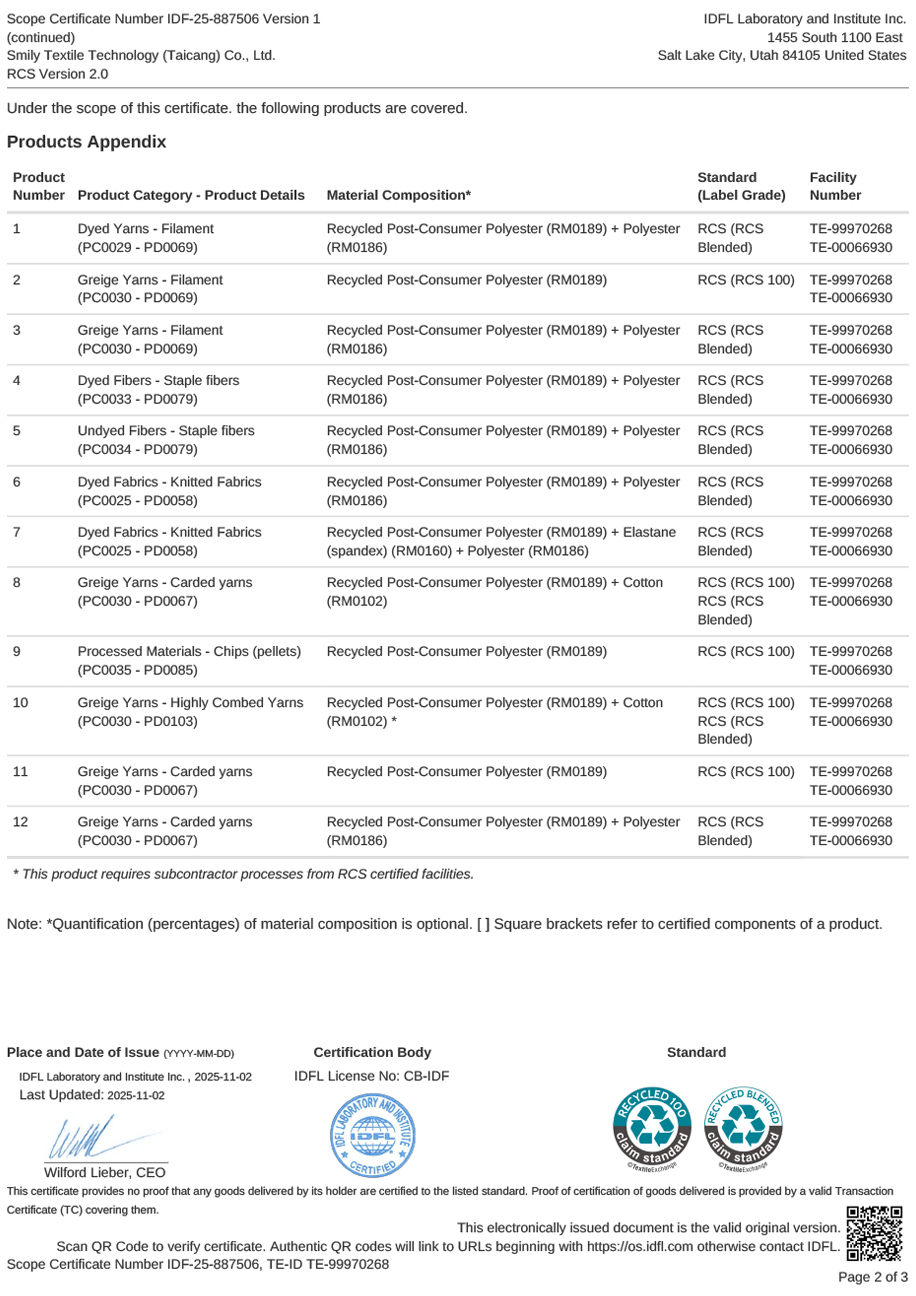
Scope Certificate page from the RCS 2.0 certification (IDF-25-887506) issued by IDFL Laboratory and Institute Inc.
Use Cases: Where the Route Fits
Yoga wear and stretch leggings. A five-year apparel OEM manufacturing case covered 2,000 pieces of yoga pants built on the coffee-charcoal route, with the result described as high stretch, quick-dry, antibacterial and eco-friendly dope-dyed, designed for freedom in motion. The same case records recycled materials with GRS/RCS certification meeting the brand's sustainable development requirements — the two-track evidence model in practice.
Underwear and home textile. These are the applications where odor control and anti-microbial behaviour carry the most consumer value, and where the porous adsorption mechanism of coffee carbon fibre is the most relevant part of the function list.
Sport and leisure outer layers. Far-infrared heat storage and quick drying are the primary selection drivers here, with dope-dyed colour supporting a lower-dyeing colour strategy.
Multi-market garment programmes. A separate garment manufacturing case covering 5 tons across Japan, Malaysia, China and the United States over a 2–5 year relationship records the same pattern: functional requirements for quick-drying, antibacterial, far-infrared heating, cotton-like touch and recycled eco-friendly materials, supported by GRS/RCS-certified recycled content.
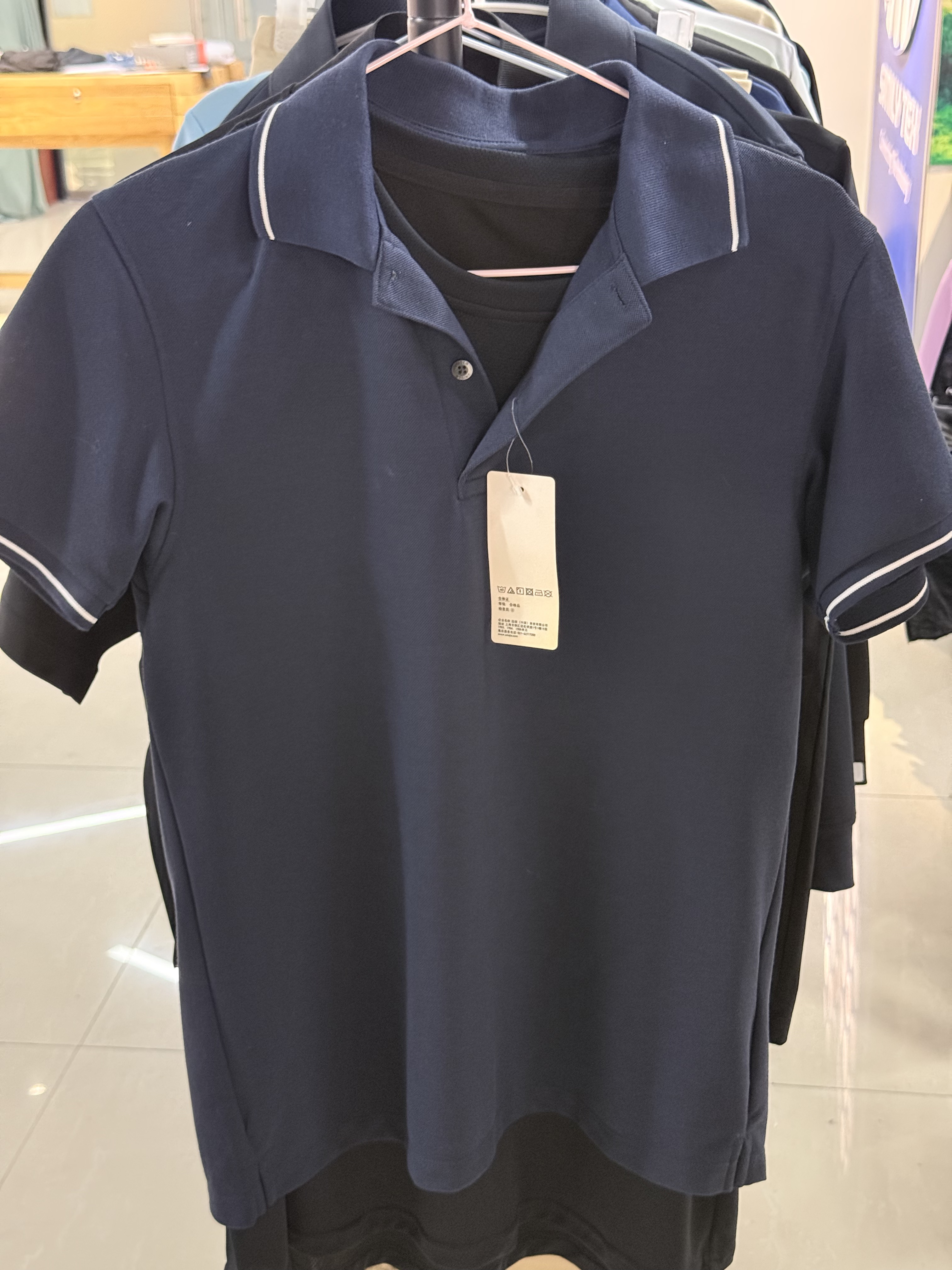
Garment application built on coffee charcoal antibacterial polyester filament.
Comparison Table: Positioning the Coffee-Charcoal Route
The table below compares Cocarber® with the other functional filament families in the Smilytex portfolio using company-reported specifications. All values are as published by the supplier; none of the functional claims in this table substitute for buyer-side testing on the finished fabric.
| Model | Material route | Core functions (company-reported) | Available counts | Typical applications |
|---|---|---|---|---|
| Cocarber® | Recycled coffee waste processed with colorants into functional masterbatch, blended with recycled PET bottle flakes | Recycle coffee waste, odor control, far-infrared heating, quick dry, dope dye, anti-microbial | 30D, 50D, 75D, 100D, 150D, 300D | Woven and knitted; sport, leisure, underwear, home textile |
| Swarin® | DTY recycled polyester (far-infrared heat) | Odor control, far-infrared heating, anti-microbial | 30D, 50D, 75D, 100D, 150D, 300D | Apparel, leisure, underwear, sport, home textile |
| Respawn® | T2T recycled polyester via chemical recycling and polymer rebuilding | Low-temperature dyeing, moisture management | Filament and staple fiber | Woven and knitted; sport, leisure, home textile |
| Physcool® | Conventional, melange, dope-dyeing, cotton-feel, renewable, hydrophilic, antibacterial and anti-UV variants | Instant cooling, anti-UV, anti-microbial | 30D, 50D, 75D, 100D, 150D, 300D | Sport, business, leisure; woven and knitted |
| Rimens® | Cotton-like polyester (DTY / ATY) | Cotton-like hand-feel, non-spandex elasticity | 60D, 80D, 90D, 130D, 160D, 190D, 260D, 320D, 450D | Sport, leisure, home textile |
Read the table as a selection tool, not a ranking. Cocarber® is the only family in this set whose route starts from recycled coffee waste and combines odor control with far-infrared heating and dope dye. Swarin® covers the odor-control and thermal combination from a recycled polyester base without the coffee-waste feedstock. Respawn® addresses dyeing temperature and moisture management rather than odor or warmth. Physcool® and Rimens® solve cooling and hand-feel problems respectively. A garment programme that needs two of these functions from one yarn should confirm with the supplier whether the functions can be combined or must be layered in the fabric structure.
FAQ: Compliance, Capability, Cost, Sample, Lead Time
What standards apply to a coffee charcoal antibacterial polyester filament project?
Two anchors are specified for the Cocarber® coffee-charcoal route. Far-infrared performance is evaluated against GB/T 30127-2013, the Chinese national standard “Textiles — Testing and Evaluation of Far Infrared Performance”. Caffeine residue is measured by LC-MSMS with a specification of 0.009 mg/kg. Recycled-content documentation is handled separately through RCS 2.0 (IDF-25-887506) and Global Recycled Standard V4.0 (IDF-25-887497), both issued by IDFL Laboratory and Institute Inc., covering dyed yarns, greige yarns, dyed fibers, undyed fibers and dyed fabrics across the EU, US, global brand supply chain and China markets. Buyers should confirm current certificate validity and scope before ordering.
Can the yarn be customized, and what counts are available?
Cocarber® is available in 30D, 50D, 75D, 100D, 150D and 300D and is positioned for both woven and knitted applications. Smilytex works in an ODM mode: its spinning process can be used to customize the style, elasticity and handle of the yarn according to customer requirements, and it operates with a 10-engineer R&D team and more than 20 core patented technologies covering invention, utility model and design patents. Quality control for this programme is stated as 100% testing.
What is the minimum order quantity and capacity?
Smilytex states a minimum order quantity of 500 kg, a monthly capacity of 1.6 tons and a lead time of 5–20 days for its functional filament programme. Export markets are the EU, USA and Japan, and exports represent 70% of the business. For a first launch, plan the initial shade card and the bulk order around the 500 kg threshold rather than around a retail-size trial.
How should a sample be validated before bulk production?
Build the sample around the fabric, not the cone. Approve the shade at masterbatch stage, then produce a knitted or woven sample through the intended finishing route, and test it against GB/T 30127-2013 for far-infrared performance plus LC-MSMS for caffeine residue at 0.009 mg/kg. Add separate protocols for odor control, quick drying and anti-microbial performance if those functions are part of the claim. Confirm in parallel that the certificate scope covers the specific yarn and fabric form being ordered.
What lead time and after-sales support come with the order?
The stated lead time is 5–20 days. Smilytex describes after-sales support covering product assistance for quality or performance issues on yarns and fabrics, returns and exchanges for defective products under the stated process, order tracking and shipping updates, technical guidance on using fabrics or yarns in manufacturing, warranty coverage for material or workmanship defects on most products, and ongoing customer feedback for long-term partnership. To move from evaluation to a sample or quotation for a coffee-charcoal project, contact Smilytex at Archer.Tan@smilytex.com or through the WhatsApp line at +86-13706246300 and state the function set, denier, shade direction and target fabric construction.
Conclusion
A coffee charcoal antibacterial polyester filament project succeeds when the process chain is sequenced correctly: fix the masterbatch route, decide colour before spinning, match denier to construction, agree the test protocol before bulk, and assemble recycled-content documentation alongside functional test reports. The Cocarber® route from Smilytex provides a concrete reference for all five decisions, starting from recycled coffee grounds processed with colorants into a functional masterbatch and blended with recycled PET bottle flakes, and ending in a dope-dyed yarn specified against GB/T 30127-2013 and LC-MSMS caffeine residue testing at 0.009 mg/kg.
Teams that treat certification and functional performance as two separate evidence tracks — rather than one marketing claim — reach production with fewer surprises and a specification that survives a second season.
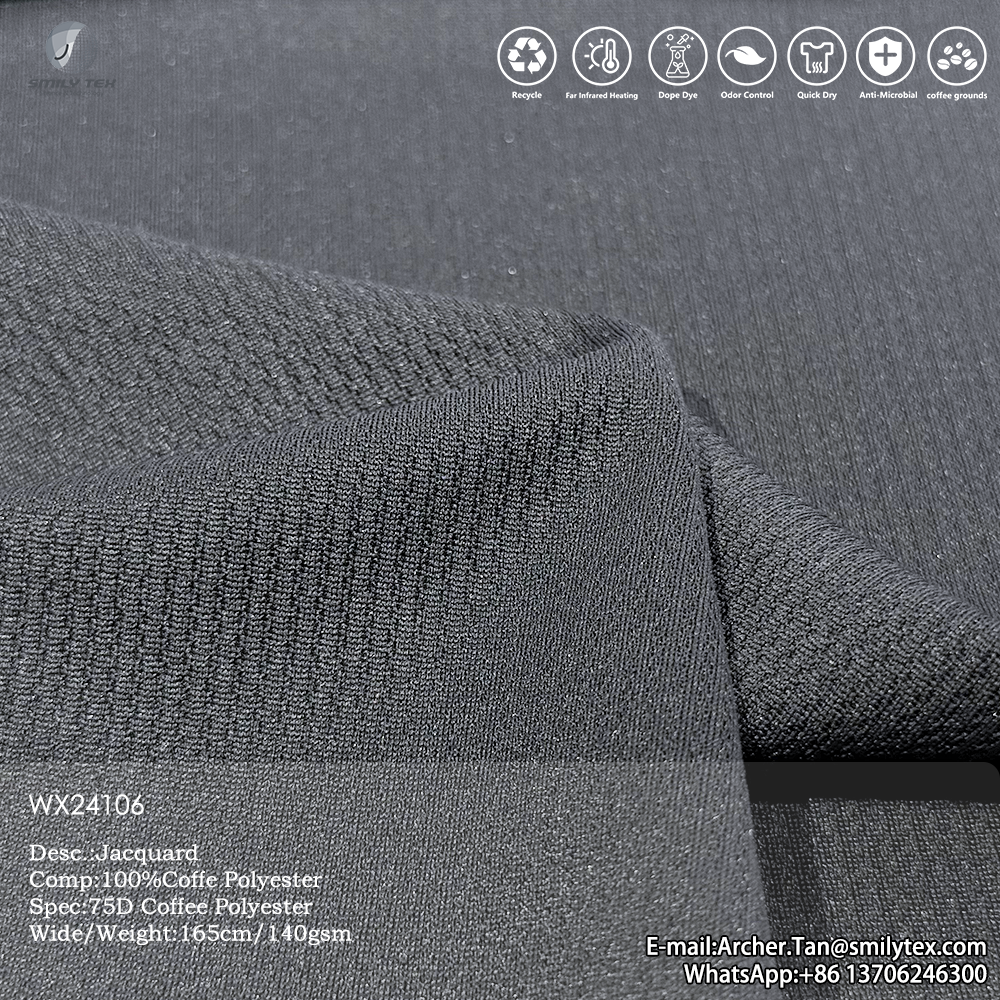
Cocarber® WX24106 Black — request a shade card and sample against your target fabric.
Next step: sample, shade card and quotation
Send your function set, denier, shade direction and fabric construction to Archer.Tan@smilytex.com, or message +86-13706246300 on WhatsApp. Technical documentation is available at www.smilytex.com, and the full product brochure can be downloaded here: Smilytex functional fiber brochure (PDF).
Have Questions or Need More Details?
Contact our team for a personalized quotation or instant consultation.
Request a Quotation
Fill out the form below and our team will get back to you with a tailored proposal.
WhatsApp Direct Chat
Prefer to chat in real-time? Message us on WhatsApp for instant assistance & quick answers.
- Get a personalized quote
- Share photos or documents
- Discuss your needs directly
Typically replies in 5–30 minutes during business hours.