
How to Meet Far Infrared and Caffeine Residue Compliance for Coffee Charcoal Polyester Filament
A coffee charcoal polyester filament only becomes a compliant, sellable material when two independent test results exist side by side: a far-infrared performance report issued against GB/T 30127-2013, and a caffeine residue result quantified by LC-MS/MS against a limit of 0.009 mg/kg. Neither report substitutes for the other, and neither one is delivered by a recycled-content certificate.
Smily Textile Technology (Taicang) Co., Ltd. — trading as Smilytex — is a Taicang-based developer and supplier of functional polyester filament and functional fashion fabrics, established in 2017, whose coffee-derived functional series is marketed as Cocarber®. Because coffee-based additives sit at the intersection of a performance claim and a residue question, the compliance file for this category is more demanding than for a standard polyester filament.
This guide is written for buyers and product teams who are past discovery. You have already chosen a recycled coffee-ground-based functional masterbatch route or a recycled polyester base, and the remaining task is to close the order with evidence rather than assurances.
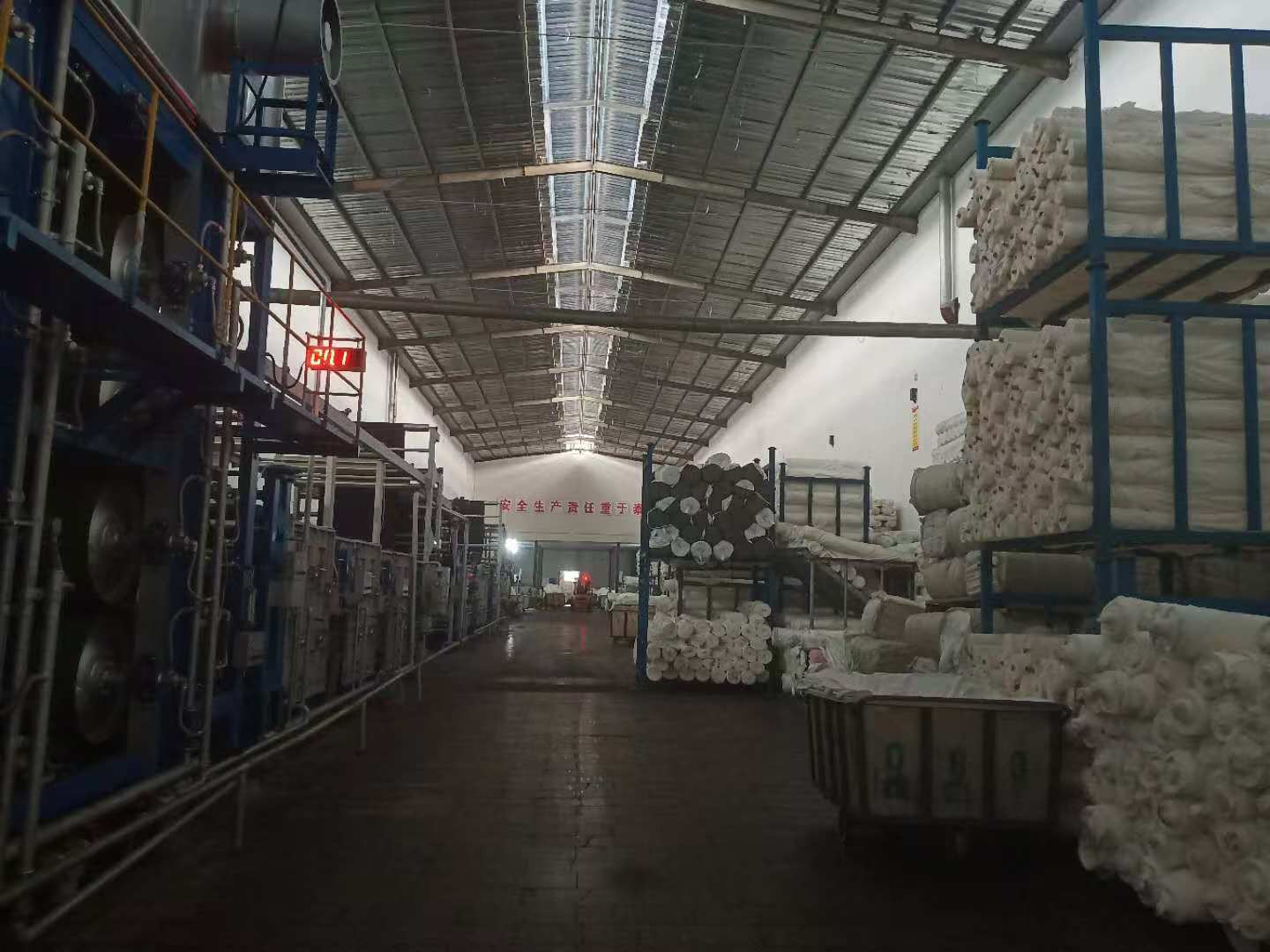
Why Coffee Charcoal Creates Two Separate Compliance Problems
The two requirements fail in different places, are run by different laboratories, and produce different documents. Treating them as one item is the most common reason a coffee charcoal project stalls between sampling and bulk production.
Far infrared is a function claim. “Far infrared heating” describes how a textile article behaves when it interacts with the body and its surroundings. GB/T 30127-2013 is the standard named for that far-infrared performance evaluation, and a report citing it is what converts a descriptive phrase on a tech pack into a verified property of a specific article. Without that report, the claim rests on the supplier's assertion alone.
Caffeine residue is a cleanliness claim. Spent coffee grounds carry caffeine, and the carbonisation and masterbatch steps determine how much of it survives into the polymer. At a limit of 0.009 mg/kg — nine micrograms per kilogram — the measurement is a trace-level analytical task, which is why LC-MS/MS (liquid chromatography with tandem mass spectrometry) is named rather than a general chemistry screen. The technique separates the sample extract chromatographically and then detects the target molecule with mass-selective detection, which is what makes a limit that low meaningful.
A third question usually appears alongside these two: whether the coffee content can be presented as recycled content. That is a certification question with its own rules, explored below, and it cannot be answered by either test report.
Industry Background: Why Compliance Files Are Being Read More Carefully
Polyester filament remains the base material for most performance apparel programmes. The global polyester filament yarn market was valued at USD 104.80 billion in 2024, according to Spherical Insights, while the recycled polyester segment is projected to reach USD 26.18 billion by 2030, growing at a 9.25% CAGR, according to Grand View Research. Coffee-waste additives are positioned inside that second, faster-growing segment, which is exactly where brand compliance teams apply the most scrutiny.
Recycled-content certification has become familiar to buyers. The Recycled Claim Standard and the Global Recycled Standard set criteria for third-party certification of recycled materials and chain of custody, and GRS adds processing, social, environmental and chemical requirements on top of the content threshold. Under GRS, consumer-facing labelling requires at least 50% recycled content. These are well-defined schemes with well-defined limits.
The limit is this: a scope certificate confirms recycled content and chain of custody for the articles it lists. It does not confirm far-infrared performance, and it does not confirm caffeine residue. A coffee-waste claim should also be separated from a certified recycled-content claim unless certification evidence is supplied for the specific material. Procurement teams that expect one certificate to cover function and residue usually discover the gap at the pre-shipment inspection stage, when re-testing is expensive.
What a Compliance-Ready Coffee Charcoal Supply Chain Contains, Stage by Stage
1. Feedstock and masterbatch
Cocarber® utilises carbonised spent coffee grounds as a functional masterbatch for odour control and far-infrared heating. Smilytex positions the series around coffee-waste recycling, odour control, far-infrared heating, quick drying, dope dyeing and antimicrobial functions. Those are the claims the test file has to support — a list of intended functions is a starting point, not evidence.
For the buyer, the masterbatch is where residue risk is created or controlled. Ask for the batch certificate of analysis, the carbonisation route in outline, and the additive content stated as a number rather than an adjective. If roasted coffee grounds were only milled and compounded, the residue question becomes harder to answer than if they were carbonised before compounding.
2. Additive loading and yarn construction
Additive content is a documentable parameter, and documentable parameters are what make a claim reproducible. Smilytex's Black Mirror® series, for example, uses a sheath-core composite yarn containing 15% functional additive powder, and that figure appears in the product specification. Buyers sourcing a coffee charcoal grade should demand the same format: a stated loading, a stated yarn structure, and a stated base polymer.
Construction also determines whether an existing report is valid for your order. Smilytex provides ODM production services and customises yarn style, elasticity and handle according to customer needs. A customised construction is a different article, and a different article needs its own test evidence.
3. Spinning, knitting or weaving, and finishing
The filament may be knitted or woven into fabric, and dope dyeing — one of the functions associated with Cocarber® — reduces downstream wet processing. Finishing auxiliaries, heat-setting conditions and dyeing route all influence both residue and radiative behaviour. This is why a yarn-level report cannot be quietly carried over to a finished knit: the article named on the report must match the article you intend to sell.
4. The instruments behind each report
Two laboratory capabilities sit behind the file. The far-infrared report requires a laboratory equipped to run the GB/T 30127-2013 method on textile specimens. The caffeine residue report requires an LC-MS/MS system with sample preparation suitable for textile matrices, capable of quantifying at the 0.009 mg/kg level. If odour control or antibacterial performance is also being claimed, that is a third and fourth test, run on separate instruments and reported separately.
The buyer's task is not to purchase instrumentation. It is to confirm that each report names the method, the laboratory, the article tested and the result — and that the result is expressed against the specification you issued.
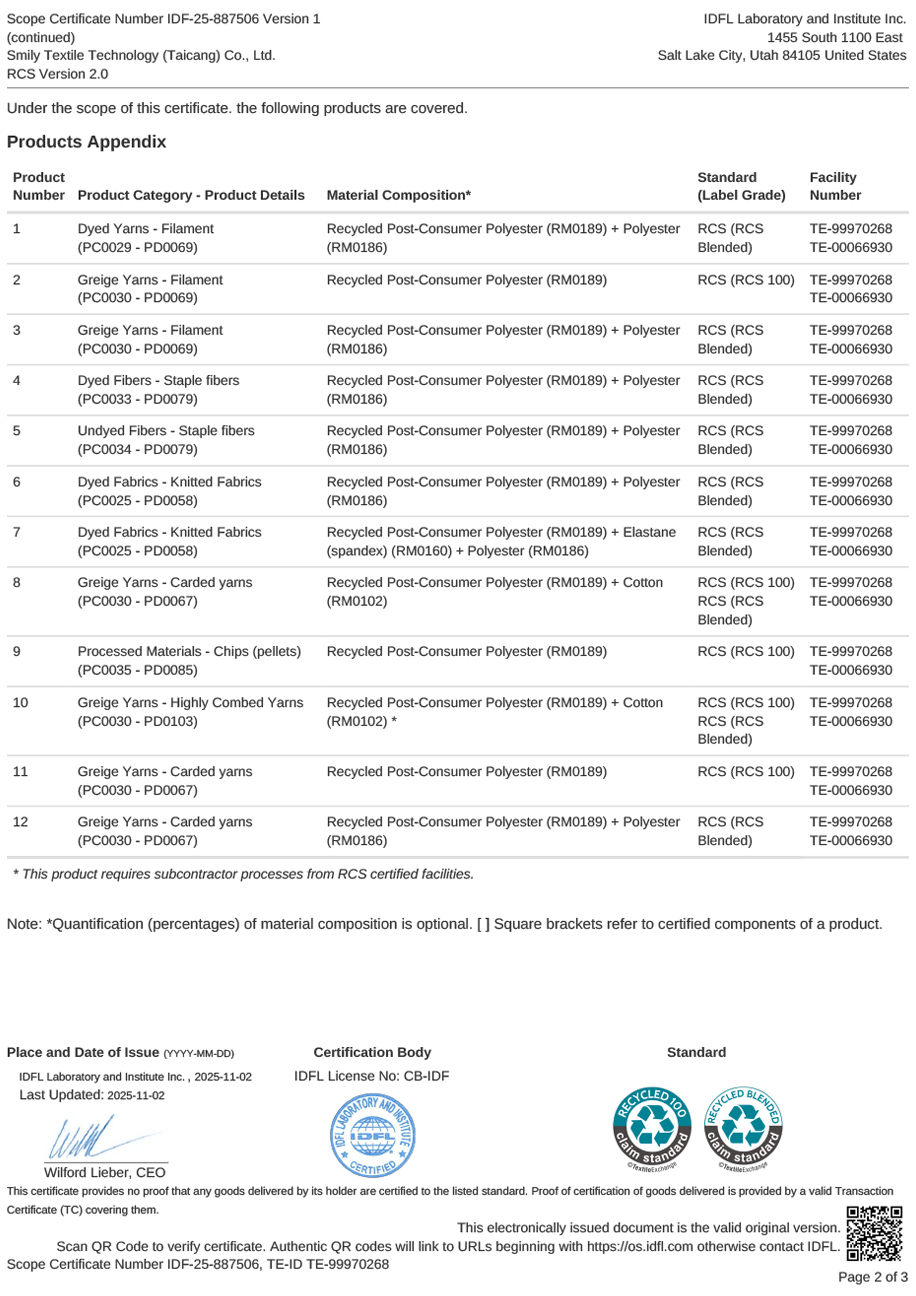
Step-by-Step: Building the Compliance File Before You Commit
Step 1 — Write both requirements into the specification before sampling
Name GB/T 30127-2013 for far-infrared performance and LC-MS/MS at 0.009 mg/kg for caffeine residue. State explicitly whether the tested article is greige yarn, dyed yarn or finished knitted fabric, and state which party holds the original report. A specification that names a standard but not an article leaves the supplier free to test something other than what you will buy.
Step 2 — Qualify the masterbatch, not only the yarn
Request the batch certificate of analysis for the carbonised coffee-ground masterbatch, the stated additive content, and a short description of the carbonisation process. Residue performance is largely decided here, several process steps upstream of the yarn you will inspect.
Step 3 — Fix yarn construction and loading in writing
Record the base polymer, the composite structure and the additive percentage in the approved specification. If the programme uses ODM customisation of style, elasticity or handle, record that too, because any of those changes creates a new article for testing purposes.
Step 4 — Control fabric formation and finishing
Decide the knitting or weaving structure and the finishing route before the first bulk lot. Dope-dyed routes reduce wet processing, which is one reason they are attractive for coffee-based colours. Whatever route is chosen, the far-infrared test must be run on that construction, not on a convenient laboratory standard.
Step 5 — Commission both tests at the correct stage
Order the far-infrared report on the finished fabric article you intend to sell, and the caffeine residue report on the article your specification names. Confirm both reports will include method, laboratory identity, specimen description and result. Two reports are the deliverable; one report is not half a file, it is an incomplete file.
Step 6 — Assemble the documentation pack
Combine the two test reports with the recycled-content scope certificate, the masterbatch certificate of analysis and the approved specification. A single index page mapping each claim on the tech pack to one document is worth more than a folder of PDFs during a brand audit.
Step 7 — Re-verify per lot and per season
Masterbatch batches change, finishes change, and certificates carry validity windows. Scope certificates in particular have issue and expiry dates, so request current copies for each season rather than reusing an old file. Smilytex states 100% test as its quality-control practice, which supports lot-level verification — but the report still has to be issued for the article you are buying.
Use Cases: Where These Two Reports Decide the Order
Compliance pressure is highest where the coffee story is most visible to the consumer. In an apparel OEM programme in China, Smilytex's coffee-based filament was used for 2,000 pieces over a five-year relationship, with the resulting fabric delivering high stretch, quick-dry and antibacterial performance alongside eco-friendly dope-dyed colour — the functions cited in that project included recycled coffee waste, odour control, far-infrared heating and antimicrobial performance. A programme making those claims in retail needs both the function report and the residue report on file.
In a second pattern, garment manufacturing clients across Japan, Malaysia, China and the United States have used Smilytex functional polyester for production quantities of 5 tons over relationships of two to five years, meeting requirements for quick-drying, antibacterial, far-infrared heating, cotton-like touch and recycled eco-friendly materials. Multi-market programmes are where documentation discipline pays: an EU or Japanese brand questionnaire will usually ask for the standard name, the laboratory and the article tested, not just a pass or fail.
In practice, three scenarios drive the strictest reading of the file:
- Thermal base layers and warming knits — far infrared is the headline claim, so the GB/T 30127-2013 report becomes the primary document and must match the retail construction.
- Yoga and activewear — the coffee-waste narrative is the marketing hook, and the caffeine residue report protects the story against a safety challenge.
- Private-label programmes with quarterly repeats — the file must be refreshed per lot, because neither claim survives an unverified batch change.
Comparison Table: What Each Document Actually Proves
| Requirement or certificate | What it verifies | Typical evidence | What it does not cover |
|---|---|---|---|
| Far-infrared performance — GB/T 30127-2013 | Far-infrared behaviour of the textile article tested under the named method | Test report naming the standard, the laboratory, the specimen and the result | Caffeine residue, recycled content, odour or antibacterial claims |
| Caffeine residue — LC-MS/MS at 0.009 mg/kg | Residual caffeine in the tested article, quantified at trace level | Analytical report naming the technique, the limit and the result | Far-infrared performance, recycled content, chain of custody |
| GRS V4.0 — scope certificate IDF-25-887497, issued by IDFL Laboratory and Institute Inc. | Recycled content claim scope and chain of custody for the listed articles; GRS consumer-facing labelling requires at least 50% recycled content | Scope certificate listing certified greige yarns, dyed yarns, dyed and undyed fibres and dyed fabrics | Function performance and residue testing; confirm current validity dates on the copy supplied with your order |
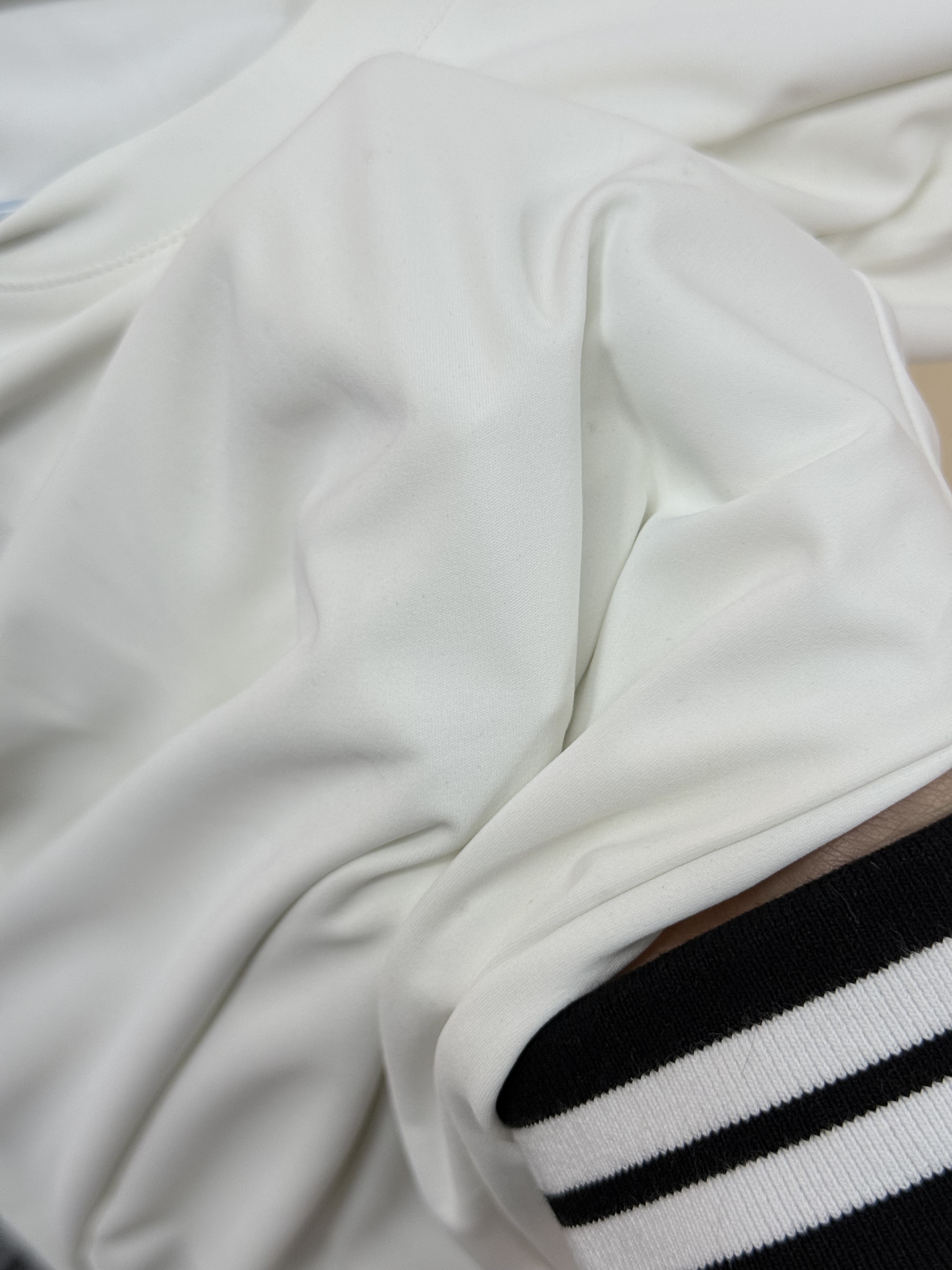
| RCS 2.0 — scope certificate IDF-25-887506, issued by IDFL Laboratory and Institute Inc. | Recycled content claim scope for the listed articles | Scope certificate listing the certified product categories | Function performance and residue testing; the additional GRS-level requirements |
| Document in the pack | Who issues it | What to check before you approve |
|---|---|---|
| Far-infrared test report | Testing laboratory | Standard cited is GB/T 30127-2013; specimen matches the retail construction |
| Caffeine residue report | Analytical laboratory | LC-MS/MS named; result reported against 0.009 mg/kg; specimen identified |
| Masterbatch certificate of analysis | Masterbatch or filament supplier | Batch reference, additive content stated numerically |
| Recycled-content scope certificate | Certification body (IDFL for Smilytex) | Products and processes listed match your order; validity dates current |
| Approved specification | Buyer and supplier jointly | Yarn structure, loading, fabric construction and finishing route all recorded |
FAQ: Far Infrared and Caffeine Residue Compliance
1. Which standard should the far-infrared report cite, and which article should be tested?
The report should cite GB/T 30127-2013, the standard named for far-infrared performance evaluation. Test the article you intend to sell: if the claim will appear on a finished knitted fabric, the report must describe that fabric, including its construction and finishing route. A yarn-level report does not automatically transfer to a different fabric, and a report that does not identify the specimen cannot support a label claim.
2. How should caffeine residue be tested against a 0.009 mg/kg limit?
Caffeine residue is tested by LC-MS/MS — liquid chromatography coupled with tandem mass spectrometry — because a limit of 0.009 mg/kg requires trace-level quantification rather than a general chemistry screen. The report should name the technique, identify the specimen, and state the result against the limit. Caffeine is the characteristic molecule carried by spent coffee grounds, so its residue level is the practical indicator of how thoroughly the feedstock was processed before compounding.
3. What capability should a supplier demonstrate before you accept its compliance file as usable?
Look for four things: a defined product series rather than an open-ended catalogue, a documented additive content, a stated quality-control practice such as 100% test, and customisation capability that is transparent about what changes when construction changes. Smilytex, established in 2017, operates a 16,220 m² facility with 206 employees and an R&D team of 10 engineers, holds more than 20 core patented technologies, exports around 70% of output to the EU, USA and Japan, and provides ODM production services with customisation of yarn style, elasticity and handle. Those facts describe capability; the two test reports remain the compliance evidence.
4. Do the two tests change the MOQ or the commercial terms?
Treat testing as a separate budget line from the yarn. Smilytex quotes a MOQ of 500 kg with a production lead time of 5–20 days, delivery terms FOB Shanghai or CIF to the destination port as required, and payment by T/T in advance or L/C at sight as preferred. Ask for the far-infrared and caffeine residue tests to be itemised in the same quotation so the cost of evidence is visible before the order is placed, and agree in writing which party holds the original reports.
5. How do we validate compliance on a sample, and how long does a compliant order take?
Validate on the sample stage, not after bulk. Request the sample against the written specification from Step 1, then confirm that the test reports describe the same construction you are holding. Production lead time is 5–20 days once the specification and the documentation scope are agreed, so the testing window should be planned before production starts rather than after it ends. To begin, request a coffee charcoal antibacterial polyester filament sample and a quotation that itemises both the far-infrared test against GB/T 30127-2013 and the caffeine residue test by LC-MS/MS at 0.009 mg/kg — Smilytex can be reached at Archer.Tan@smilytex.com, by telephone on 86-512-53991066, or through www.smilytex.com.
Conclusion: Two Reports, One Decision
Coffee charcoal polyester filament is a credible product category, but it is only a compliant purchase when the far-infrared claim rests on a GB/T 30127-2013 report and the residue question is closed by an LC-MS/MS result at 0.009 mg/kg. Recycled-content certification — GRS or RCS — sits alongside those documents as a third, separate proof about material origin and chain of custody. Build the file in the order set out above: specification first, masterbatch qualification second, fabric construction third, testing fourth, documentation pack fifth, and lot-level re-verification thereafter.
Buyers who work in that sequence spend their evaluation time on the two questions that actually decide whether the claim survives a brand audit, instead of re-testing after bulk delivery. Companion guides on this blog cover certification verification, the Cocarber® coffee-waste route from grounds to yarn, and specification writing for coffee charcoal antibacterial projects — read them alongside this file when you assemble a full sourcing pack.
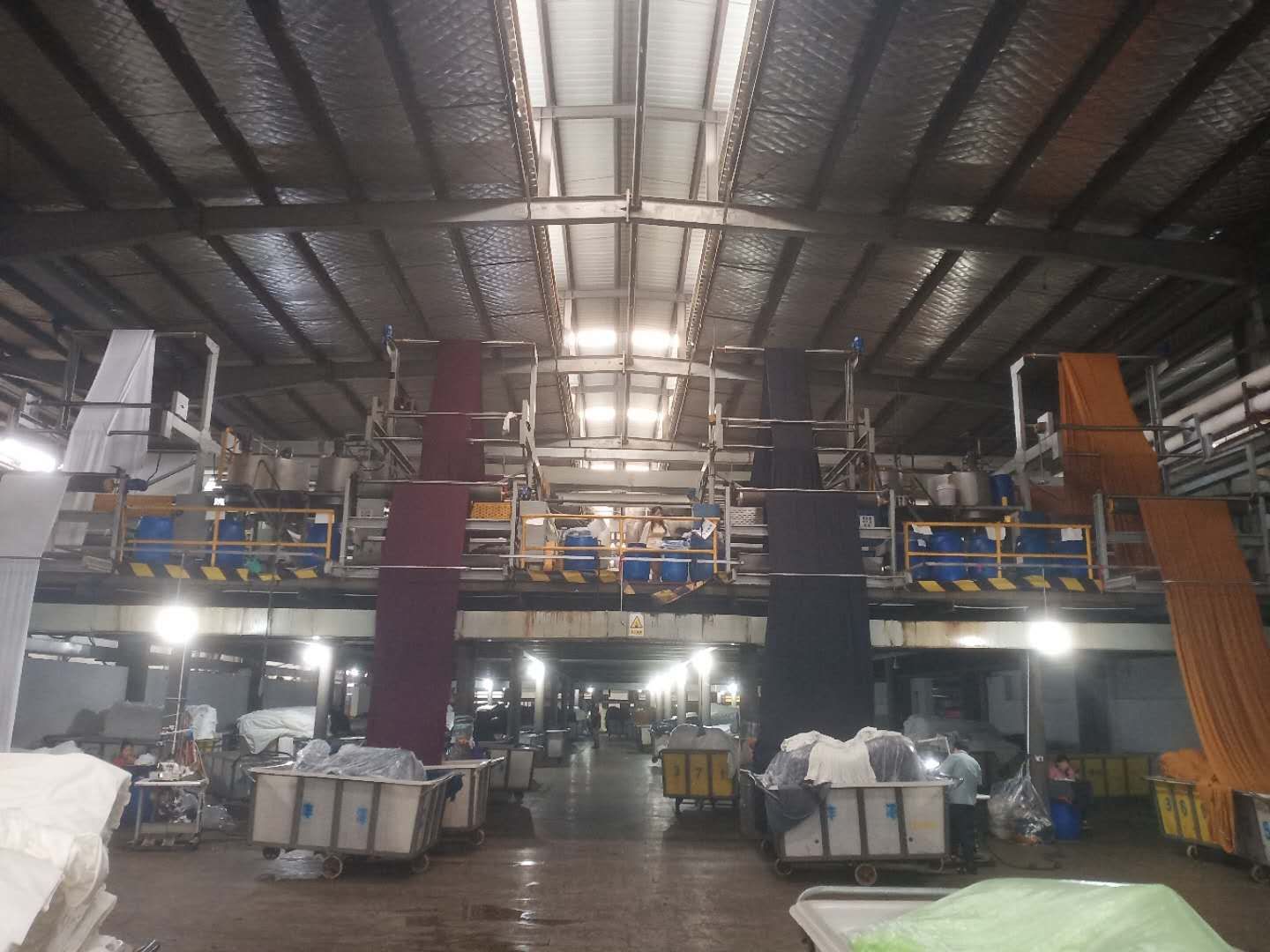
Next Step
Smily Textile Technology (Taicang) Co.,Ltd develops and supplies functional polyester filament and functional fashion fabrics from Taicang, Jiangsu, China. For a coffee charcoal antibacterial polyester filament project, request a sample, a specification sheet and a quotation that separates yarn, MOQ and testing.
Download the company profile and product brochure: Smilytex brochure (PDF)
Email: Archer.Tan@smilytex.com · Tel: 86-512-53991066 · WhatsApp: +86-13706246300 · Website: www.smilytex.com
Have Questions or Need More Details?
Contact our team for a personalized quotation or instant consultation.
Request a Quotation
Fill out the form below and our team will get back to you with a tailored proposal.
WhatsApp Direct Chat
Prefer to chat in real-time? Message us on WhatsApp for instant assistance & quick answers.
- Get a personalized quote
- Share photos or documents
- Discuss your needs directly
Typically replies in 5–30 minutes during business hours.