
Long-Term Functional Polyester Filament Supply: A Partnership Playbook for Performance Apparel Programs
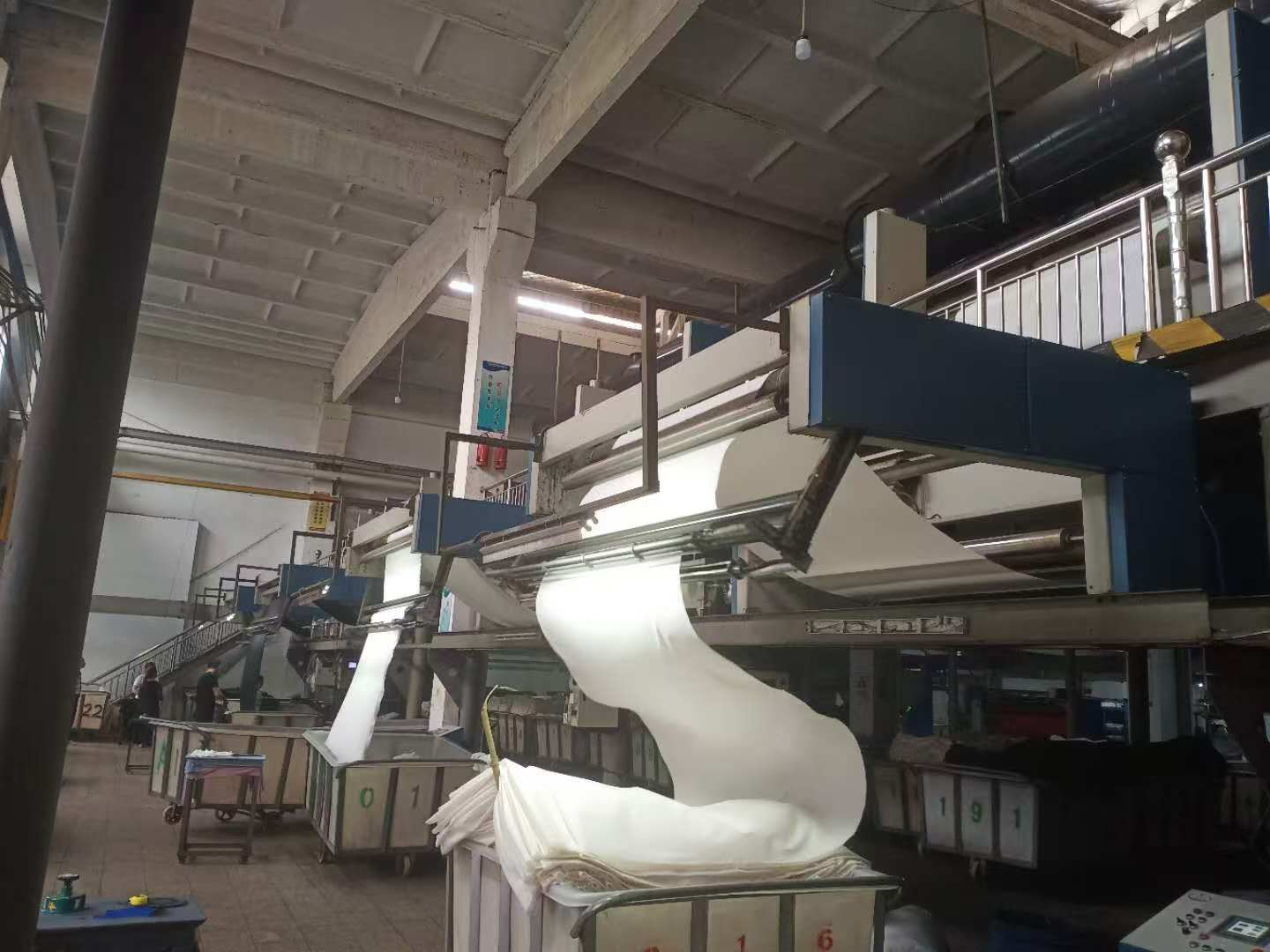
Image: Smilytex production facility in Taicang, China.
Long-Term Functional Polyester Filament Supply: A Partnership Playbook for Performance Apparel Programs
For brands and manufacturers running ongoing performance apparel programs, the core procurement question is not “who can ship one trial order” but “which supplier can sustain quality, capacity, compliance and innovation across multiple seasons.” This guide explains how to evaluate, onboard and manage a functional polyester filament supplier for multi-year success, with practical reference to Smilytex’s operating model.
Securing long-term functional polyester filament supply is fundamentally different from spot buying. It requires assessing supplier stability, production capacity, quality traceability, R&D depth, compliance infrastructure and responsiveness to changing garment programs. The goal is to build a partnership that can scale with your product roadmap, not just fulfill a purchase order.
The Problem: Why Short-Term Functional Filament Sourcing Fails
When a performance apparel program grows, relying on transactional suppliers creates recurring risks. A supplier who can deliver one container of functional polyester filament may not be able to maintain performance consistency across repeat batches, align with evolving compliance standards, or respond quickly when your designer specifies a new functional requirement such as ultra-matte aesthetics, moisture permeability, UV-resistant heat shielding, or low-temperature dyeable recycled content.
Common failure patterns include: performance claims that cannot be reproduced in bulk, shade variation between production batches, processing incompatibility during knitting or finishing, and slow corrective action when a quality issue appears. These problems are not random — they usually trace back to absent specification discipline, weak traceability, or insufficient technical engagement before production.
Long-term sourcing, by contrast, requires the supplier to operate as a technical partner. That means clear application guidance, validated test standards, batch-by-batch traceability, and a structured process for addressing deviations.
Industry Context: Functional Polyester Filament in a Growing Market
The global polyester fiber market was valued at approximately USD 82.07 billion in 2025 and is projected to reach about USD 148.11 billion by 2034, with Asia Pacific accounting for a significant portion of demand. In the filament segment specifically, the polyester filament yarn market was estimated at roughly USD 106.4 billion in 2024, reflecting continued demand from apparel, athleisure and home textile applications.
Within this landscape, the shift toward functional and sustainable materials is accelerating. Athleisure brands increasingly specify moisture-wicking and antimicrobial polyester blends, while sustainability programs drive interest in recycled content such as T2T recycled polyester filament. This creates a buyer challenge: functional filaments are not interchangeable commodities, and supplier selection determines whether performance goals are actually met.
For brands sourcing from China, the practical implication is clear. Shortlisted suppliers must demonstrate not only yarn specifications but also the operational systems that protect consistency over years of collaboration.
What Long-Term Supply Actually Requires from a Supplier
Before choosing a long-term functional polyester filament partner, buyers should evaluate six dimensions. These go beyond the basic product datasheet and assess the supplier’s ability to sustain a multi-season relationship.
1. Production Capacity and Lead-Time Stability
Capacity planning matters because performance apparel programs rarely have predictable demand curves. A supplier with limited monthly output can become a bottleneck during peak seasons. Smilytex, for example, operates with a monthly production capacity of 1.6 tons and a typical lead time of 5–20 days for functional fiber and fabric orders. Buyers should compare this against their projected consumption and ask how capacity is allocated among existing customers.
For growing programs, a transparent conversation about capacity reservation and production scheduling is more valuable than a vague promise of “enough supply.”
2. Quality Traceability and Batch Control
Functional performance — such as UV resistance, antibacterial activity, far-infrared properties or moisture management — must be consistent from batch to batch. This requires traceability records by lot, retain samples for verification, and clear specifications for parameters like GSM, width, shrinkage, strength and color.
When performance is engineered at the yarn level through additives, masterbatch or structural design, the supplier must also explain how each batch is tested and documented. Buyers should ask for the specific test standard behind each claim, such as ISO 20743 or AATCC 100 for antibacterial performance, GB/T 30127 for far-infrared properties, or equivalent methods.
3. Compliance Infrastructure
Functional filament imported into the EU, USA or Japan must meet restricted substance requirements and increasingly, recycled-content verification standards for sustainability claims. A long-term supplier should be able to provide MSDS/TDS when applicable, screen materials against customer RSL requirements, and support third-party testing for high-risk end uses such as babywear, medical textiles or protective workwear.
Standards such as OEKO-TEX Standard 100 and the Global Recycled Standard (GRS) help formalize these expectations. Buyers should verify which certifications their target market requires and confirm the supplier can provide documentation without friction.
4. R&D Capability and Functional Portfolio Depth
Long-term partnerships usually involve new product development. A supplier’s R&D structure determines how quickly they can translate a concept like “cotton-touch with non-spandex stretch” or “instant cooling” into a producible yarn.
Smilytex, for example, was established in 2017 and operates with a professional R&D team of 10 engineers. The company holds more than 20 core patented technologies, including authorized invention patents, utility model patents and design patents. For procurement teams, this kind of innovation capacity is a useful signal that the supplier can evolve with future product roadmaps.
5. Commercial Flexibility and MOQ Alignment
Long-term supply agreements often start with smaller pilot quantities before scaling. Smilytex’s MOQ for fabric is 500 kg, with delivery under FOB Shanghai or CIF terms and payment by T/T in advance or L/C at sight. Buyers should confirm whether the supplier can support staged volume growth and whether sample-to-bulk transitions are managed through a formal pre-production approval workflow.
6. Communication and Problem-Resolution Speed
Cross-border textile supply chains fail faster on communication than on technical capability. A long-term partner should assign a dedicated contact, respond within a defined timeframe, and follow a documented CAPA process for any quality or performance deviation. This is especially important when design changes or compliance questions require rapid answers.
Step-by-Step: Building a Long-Term Functional Filament Partnership
The following workflow outlines how procurement teams can move from candidate screening to a stable, repeatable supply relationship.
Step 1: Map Your Performance Requirements
Define functional requirements by garment application: base layers, outerwear, workwear, intimate apparel or athleisure. Specify target properties such as UV resistance, antibacterial performance, far-infrared heating, moisture management, opacity or cotton-like handfeel. For each property, name the test standard and target value, then confirm the supplier can support lab or benchmark testing before bulk production.
Step 2: Screen Supplier Capability Documents
Request a company profile, product portfolio, relevant patents, and compliance documentation. Verify registered company details, factory or office location, and export experience. Smilytex, for instance, is registered as Smily Textile Technology (Taicang) Co. Ltd, located at No.6 West Beijing Road, Taicang City, Jiangsu Province, China, and exports approximately 70% of its output to the EU, USA and Japan.
Step 3: Run Sample and Benchmark Testing
Order representative samples of the specific functional series you intend to use. Test not only the yarn’s declared function but also its behavior under your planned fabric construction and finishing process. Align on test methods and acceptance criteria before placing bulk orders. For products like Black Mirror® (heat insulation, anti-UV, see-through resistant), Rimens® (cotton-like, non-spandex elasticity), Respawn® (T2T recycled, low-temperature dyeable, moisture management) and Cocarber® (recycled coffee waste, odor control, far-infrared heating, quick dry, anti-microbial), construction-level validation is critical because results vary by GSM, color and finishing.
Step 4: Audit Quality and Risk Controls
Review the supplier’s controls for the six major risk categories: performance claim risk, shade variation, processing compatibility, compliance/RSL, microfiber shedding or pilling, and skin sensitivity for high-risk end uses. A mature supplier will already have defined control methods: confirmed test standards, pre-production approval workflows, lab dip and bulk shade approval, pilot runs, and final inspections against agreed specifications.
Step 5: Negotiate Terms for Scale
Align commercial terms with your forecast. Confirm MOQ, delivery terms, payment structure, lead time, inspection procedures and documentation requirements. If you are working toward a multi-season program, discuss how the supplier will reserve capacity and manage shade control across seasons.
Step 6: Establish Review Cadence
Schedule regular business reviews covering quality KPIs, delivery performance, compliance updates and new product development. Track corrective actions through a CAPA log and maintain retain samples for ongoing verification.
Use Cases: How Long-Term Supply Models Apply in Practice
Case A: Activewear Brand Scaling From Pilot to Seasonal Programs
An activewear brand developing a new line of moisture-wicking and antibacterial garments begins with a 500 kg pilot of functional filament knit fabric. After validating performance, the brand scales to seasonal replenishment. The supplier must maintain shade consistency across multiple production batches and support fast reorders with lead times of 5–20 days.
Case B: Sustainable Collection Using T2T Recycled Content
A brand transitioning to recycled materials selects T2T recycled polyester filament with low-temperature dyeing and moisture management benefits. The supplier must document recycled content, provide testing evidence for any sustainability claims, and ensure the yarn performs equivalently across colors and garment styles.
Case C: Outdoor Workwear Requiring Multi-Function Performance
An outdoor workwear manufacturer needs a filament that combines UV-resistant heat shielding, see-through resistance and comfort for extended wear. Products such as Black Mirror® are designed for this combination, but the buyer must align on testing standards for UPF, heat insulation and anti-see-through performance as they vary by fabric construction and color.
Case D: Intimate Apparel with Comfort and Hygiene Properties
A manufacturer of intimate apparel wants a filament that offers moisture management and optional antibacterial performance without compromising softness. Here, the supplier’s guidance on limitations is as important as the claimed function. Skin sensitivity risks must be assessed through material safety screening and compliance testing before bulk production.
Comparison: Functional Polyester Filament vs. Regular Polyester for Long-Term Programs
| Comparison Dimension | Regular Polyester Filament | Functional Polyester Filament (Smilytex series examples) |
|---|---|---|
| Performance origin | Standard PET filament; functionality depends mainly on fabric construction and finishing | Engineered at yarn/material level through additives, masterbatch and structure; supports targeted functions such as UV protection, antibacterial options, far-infrared properties, moisture management and enhanced opacity |
| Typical performance baseline | UPF 15–20; no guaranteed functional KPI; antibacterial not specified; LOI 20%–22% | UPF 40–60+ depending on construction and color; drying time reduced by 30%–50%; moisture-wicking rate increased by 50%–200%; antibacterial rate ≥90% per agreed test method; LOI ≥28%; wash durability 30–50+ washes |
| Design flexibility | Limited to basic aesthetics and comfort | Multiple series address specific needs: Black Mirror® (heat insulation, anti-UV, see-through resistant), Rimens® (cotton-like, non-spandex elasticity), Respawn® (T2T recycled, low-temperature dyeable, moisture management), Cocarber® (recycled coffee waste, odor control, far-infrared, quick dry, anti-microbial) |
| Supply risk profile | Lower material cost but higher risk of failing performance goals; functions rely on post-finishing and may wash out | Higher material cost but function is built into the yarn; supporting lab data and traceability available by item |
| Best-fit applications | Basic apparel, home textiles, low-cost programs | Activewear, athleisure, workwear, outdoor apparel, base layers, intimate apparel, hygiene-sensitive apparel |
| Maintenance behavior | Machine washable, quick-drying | Comparable daily care; improved UV resistance, optional antibacterial performance to help reduce odor-causing bacteria, and in some constructions reduced visible sweat marks/staining; benefits depend on fabric construction and application |
| Cost position | Baseline | Functional polyester typically carries a premium depending on function, construction and MOQ; cost-optimized proposals available after confirming target specs and volume |
Performance values shown are representative ranges cited from functional filament testing (e.g., UPF 40–60+, drying time ↓30%–50%, moisture-wicking ↑50%–200%, antibacterial ≥90%, LOI ≥28%, wash durability 30–50+). Actual results depend on fabric construction, color, test method and finishing.
Risk Controls That Protect Long-Term Supply Stability
Every long-term functional filament program should include structured risk controls. The table below summarizes the six risk categories buyers should raise during supplier qualification.
| Risk Category | Typical Control Method | Supplier-Level Measure |
|---|---|---|
| Performance claim risk (UV, antibacterial, FIR vary by construction/test method) | Define claims based on validated test standards; confirm construction and test method before commitments | Provide application guidance and limitations in specs; offer sample/benchmark testing; align standards before bulk |
| Shade variation risk (batch-to-batch dope-dyed; dye-lot differences for piece-dyed) | Compare by production batch or dye lot; provide shading sheet when required | Pre-production approval workflow: lab dips/bulk shade approval; pilot run before full production |
| Processing compatibility risk (heat-setting, brushing, coating/lamination affect handfeel/color/performance) | Provide recommended processing window: heat-setting temperature, brushing parameters, coating suitability | Process guidance and pre-production approval; retain samples; CAPA for deviations |
| Compliance risk (RSL, market regulations, customer standards) | Material safety screening; compliance to customer RSL; provide MSDS/TDS when applicable | Traceability by batch/lot; confirm standards and third-party lab testing for high-risk end uses |
| Microfiber shedding/pilling risk | Confirm yarn construction, filament count and fabric structure; test per agreed methods | Clear specs on what yarn can/cannot achieve; sample testing before bulk |
| Skin irritation/sensitivity risk for sensitive users | Material safety screening; confirm standards; pre-production approval | For babywear, medical, protective workwear: require confirmed standards and third-party lab testing before launch |
Why Suppliers Like Smilytex Position for Execution-Stage Buyers
Smilytex — formally Smily Textile Technology (Taicang) Co. Ltd — is a functional fiber and fashion fabric company established in 2017 in Taicang, Jiangsu Province, China. With a 16,220 m² facility, 206 employees and a professional R&D team of 10 engineers, the company develops functional polyester and nylon filaments for sportswear, leisurewear, underwear and home textile applications. Its monthly production capacity is 1.6 tons, with typical lead times of 5–20 days.
For buyers in the execution stage, the practical value of this structure is speed and clarity. A defined R&D team, documented patent portfolio, export experience across EU/USA/Japan markets, and published sourcing terms reduce the uncertainty that normally accompanies first-time functional filament sourcing.
Evaluating the Total Cost of a Long-Term Partnership
Functional polyester filament typically carries a premium over regular polyester. The premium depends on the required function, yarn construction and MOQ. In a long-term program, the relevant question is not only unit price but total cost of ownership: rework costs, shade rejection rates, compliance delays, and the opportunity cost of missed season launches.
Buyers should compare suppliers on quality documentation, lead-time reliability, testing transparency and responsiveness. A supplier that prevents one batch-level performance failure can justify a higher per-kilogram price through avoided disruption.
FAQ: Long-Term Functional Polyester Filament Sourcing
How does Smilytex ensure compliance with restricted substance requirements and market regulations?
Smilytex applies material safety screening and compliance checks against customer RSL requirements, providing MSDS/TDS when applicable. For high-risk end uses such as babywear, medical textiles or protective workwear, the company requires confirmation of applicable standards and third-party lab testing before product launch. Buyers should still verify the specific documentation required by their target market, including any OEKO-TEX or GRS-related requirements.
Can Smilytex support OEM or custom functional filament development for long-term programs?
Yes. Smilytex is structured as an innovative technology enterprise covering new product R&D, design and manufacture. The company’s R&D team of 10 engineers and more than 20 core patented technologies support custom functional filament projects. Buyers should bring a clear specification of target performance, fabric construction and test method so the R&D team can assess feasibility against the existing product portfolio.
What are the MOQ, payment and delivery terms for ongoing supply?
The MOQ for fabric is 500 kg. Delivery terms are FOB Shanghai or CIF to a destination port as required. Preferred payment terms are T/T in advance or L/C at sight. These terms are practical for brands transitioning from pilot to repeat orders, but buyers can request a cost-optimized proposal after confirming target specs and annual volume.
Which Smilytex functional filament series should I start with for sportswear or performance apparel?
The starting series depends on your primary function. Black Mirror® suits UV-resistant heat shielding and see-through resistance for sports and outdoor wear. Rimens® is designed for cotton-like handfeel and non-spandex elasticity. Respawn® is a T2T recycled filament with low-temperature dyeing and moisture management for sustainability-oriented programs. Cocarber® offers recycled coffee waste, odor control, far-infrared heating, quick-dry and anti-microbial properties. Smilytex can support sample testing and recommend a series after reviewing your garment application and target test standards.
How should I manage performance testing and quality acceptance with a long-term supplier?
Before bulk production, align on test methods and acceptance criteria, then run sample or benchmark testing. Use a pre-production approval workflow that includes lab dips and bulk shade approval, followed by a pilot run if feasible. At the inspection stage, verify key parameters including GSM, width, shrinkage, strength and color. Maintain traceability records by batch or lot, retain samples, and require a documented CAPA process for any deviation. If you are ready to move from evaluation to sample testing, contact Smilytex to request a sample or quote and receive application guidance based on your specific fabric construction.
Conclusion
Long-term functional polyester filament supply is not a transaction — it is a technical and operational partnership. Buyers who succeed beyond the first order focus on supplier systems: production capacity visibility, traceability, compliance infrastructure, R&D depth, and disciplined risk control. Suppliers such as Smilytex demonstrate how a mid-sized, innovation-oriented Chinese manufacturer can support execution-stage procurement with clear specifications, documented processes and responsive commercial service.
For your next performance apparel program, start by defining functional targets, validating them with sample testing, and choosing a partner who can grow with your roadmap — not just one who can ship this month.
Ready to secure your supply chain?
Contact Smilytex to discuss your functional polyester filament requirements, request samples, or obtain a cost-optimized quotation.
Email: Archer.Tan@smilytex.com | Tel: 86-512-53991066 | WhatsApp: +86-13706246300
Have Questions or Need More Details?
Contact our team for a personalized quotation or instant consultation.
Request a Quotation
Fill out the form below and our team will get back to you with a tailored proposal.
WhatsApp Direct Chat
Prefer to chat in real-time? Message us on WhatsApp for instant assistance & quick answers.
- Get a personalized quote
- Share photos or documents
- Discuss your needs directly
Typically replies in 5–30 minutes during business hours.