Coffee Charcoal, Composite & Sheath-Core Polyester Compared
Coffee Charcoal, Composite & Sheath-Core Polyester Compared
At the decision stage, a functional polyester filament comparison can be organized around three routes: coffee charcoal antibacterial, multi-functional composite, and sheath-core thermal/UV barrier. They are often treated as interchangeable upgrades to regular polyester, but they solve different garment problems, require different production steps, and create different compliance workloads. A buyer who compares them on yarn price alone can miss the test evidence, dyeing implications, and manufacturing-cycle differences that determine whether a program stays on schedule.
Smily Textile Technology (Taicang) Co., Ltd., known as Smilytex, is a Taicang-based trading company established in 2017 that engages in R&D and sales of functional fiber and functional fashion fabrics. The company reports a 16,220 m² facility, 206 employees, a 10-engineer R&D team, and a 70% export share concentrated in the EU, USA, and Japan. Its portfolio covers coffee charcoal antibacterial polyester filament plus thermal, UV, moisture, and recycled functional yarn directions, which makes it a practical reference point for comparing the three routes below.
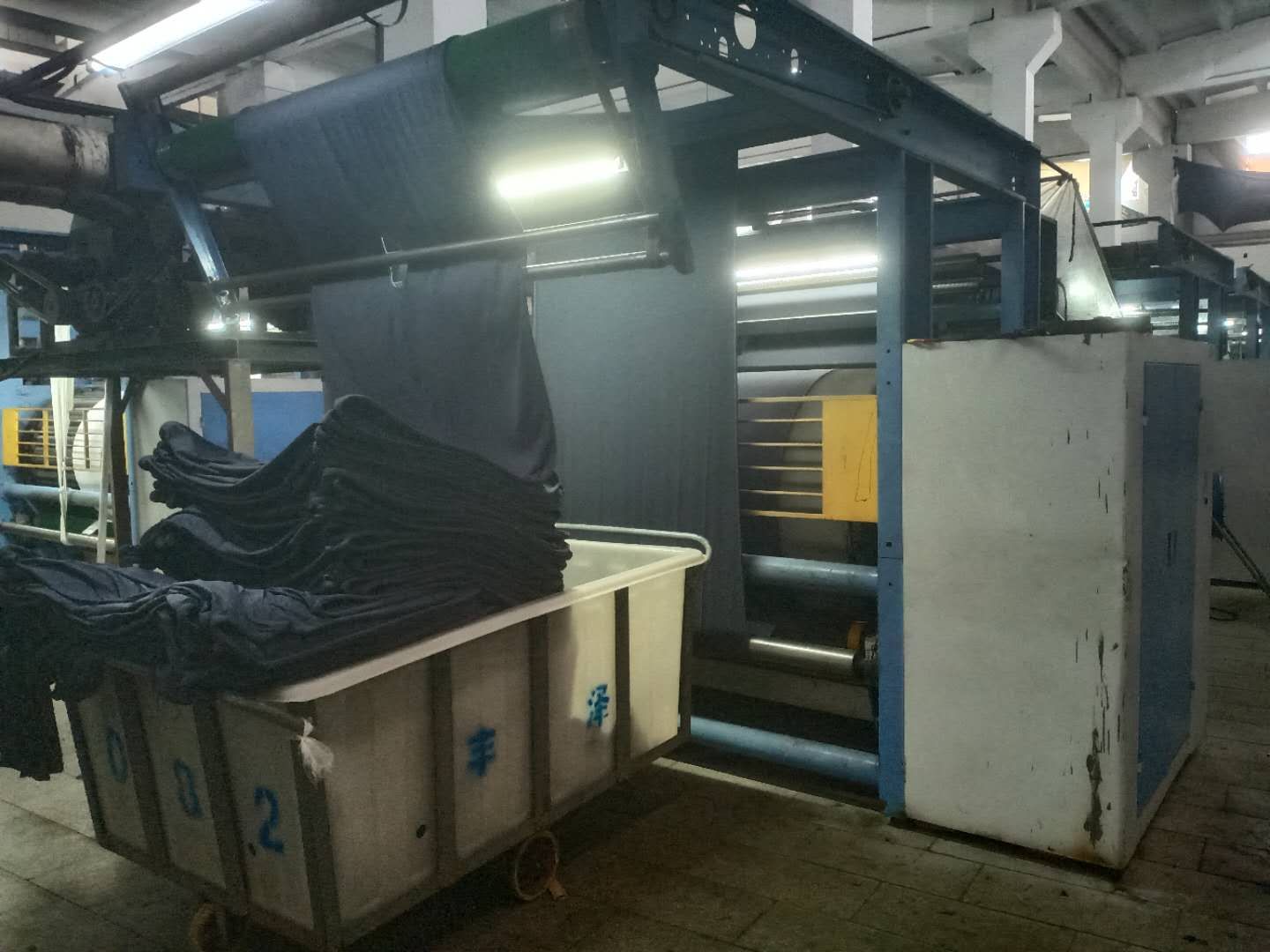
Smilytex production facility supporting functional polyester filament programs.
Why These Three Routes Are Hard to Compare Directly
The three routes do not share one performance scale. Coffee charcoal works through a carbonized coffee-ground masterbatch; composite routes combine multiple functional additives or polymer components; sheath-core routes place a functional additive inside a bicomponent filament structure. Their test methods differ, their production steps differ, and their compliance documents differ. A useful comparison therefore has to separate functional role, production requirement, test evidence, equipment, and garment fit instead of forcing all three into one “performance” score.
Functional polyester filament is engineered at the yarn or material level through additives, masterbatch, and specific yarn designs, rather than relying only on fabric finishing. In the Smilytex portfolio, this approach appears across cooling, moisture-management, UV-blocking, far-infrared, odor-control, stretch, and recycled yarn families. For a decision-stage buyer, the question is not whether functional polyester is “better” than regular polyester, but which functional route matches a defined garment brief with a manageable compliance and manufacturing burden.
Coffee Charcoal Antibacterial Route
Coffee charcoal antibacterial polyester filament uses carbonized spent coffee grounds as a functional masterbatch. In the Smilytex Cocarber® series, carbonized coffee grounds are used for odor control and far-infrared heating, and Smilytex also describes the series in connection with coffee-waste recycling, quick drying, dope dyeing, and antimicrobial function. The route therefore combines a recycled-feedstock story with odor-control, far-infrared, and antibacterial positioning.
Functionally, the route is aimed at odor-sensitive and hygiene-sensitive garments. Smilytex’s comparison data lists an antibacterial rate of ≥90% for functional polyester options under the applicable test method, and far-infrared performance is validated against GB/T 30127-2013 or an equivalent standard. Those are route-level claims that must be confirmed for the specific yarn, fabric construction, and test laboratory; they are not automatic garment-level results.
Special production requirements
Production starts with the coffee-derived masterbatch. Carbonization, grinding, and masterbatch dispersion affect how consistently the additive is distributed in the filament. The buyer should ask for the masterbatch specification, the additive loading, and the test report that connects the yarn to the claimed far-infrared and antibacterial performance. Because coffee-derived inputs are not automatically the same as certified recycled content, the feedstock story should be documented separately from any GRS or RCS claim.
Residue and safety screening also belong in the production discussion. For coffee-derived inputs, buyers should confirm the residue-testing method used for the feedstock and the finished yarn; liquid chromatography–mass spectrometry (LC-MS/MS) is one analytical approach used for trace-residue screening, but the supplier should state the actual method, detection limit, and acceptance criterion. This is a verification step, not a substitute for a test report.
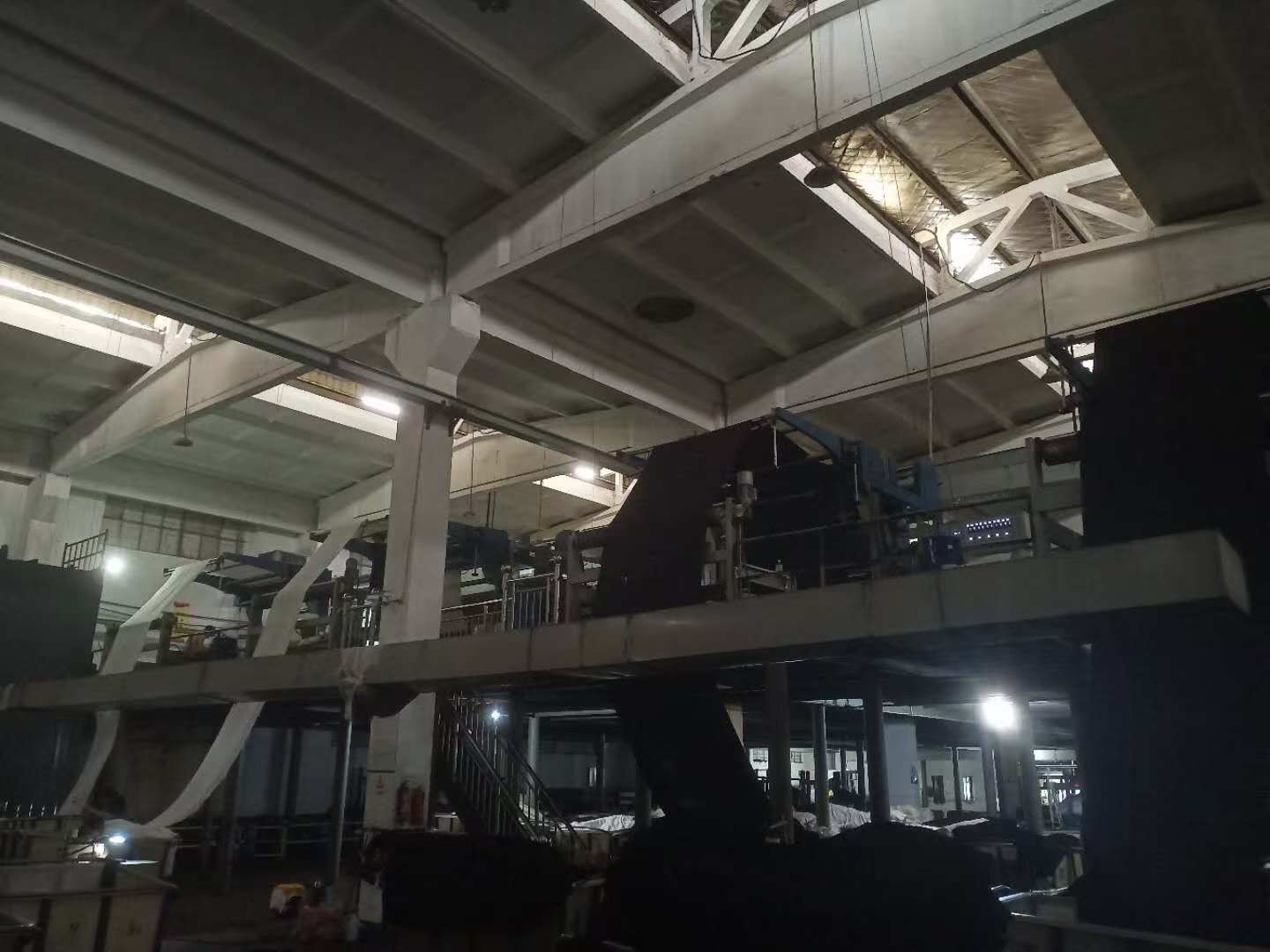
Production equipment relevant to functional polyester filament routes.
Compliance workload
Compliance workload is moderate to high. Far-infrared claims need a defined test standard and a report that matches the yarn and fabric construction. Antibacterial claims need a recognized method such as ISO 20743 or AATCC 100, as applicable, plus a clear statement of the test organism, contact time, and washing condition. For skin-contact or hygiene-sensitive end uses, the buyer should also screen for restricted substances and skin-sensitivity risk before bulk.
Multi-Functional Composite Route
A multi-functional composite route integrates more than one functional effect into the yarn system. The composite can be built through multiple functional additives, a multi-component polymer structure, or a combination of both. The practical attraction is fewer yarn SKUs for a garment that needs, for example, moisture management plus odor control, or UV protection plus a soft handfeel. The practical risk is that each added function brings its own test method and its own failure mode.
Smilytex’s portfolio contains moisture-management, antibacterial, UV-resistant, anti-see-through, and far-infrared yarn families, so a composite brief can be assembled from more than one functional direction. The buyer should not assume that a multi-function description automatically covers every claimed effect at the target performance level. Each function needs its own evidence, and the combination needs a fabric-level check because one additive or structure can affect another.
Special production requirements
Production requirements center on compatibility. Multiple additives must disperse without agglomerating, and the spinning and drawing conditions must keep the filament consistent. Dyeing is the next constraint. Where a composite specification includes cationic dyeability, shade development follows a different dye–fiber interaction than standard disperse dyeing, and the buyer should confirm target shades, including linen gray and other muted tones, through lab dips rather than relying on a yarn description. Cationic dyeability is a known polyester route, but its behavior still depends on the specific polymer and process, so it should be specified and tested rather than assumed.
Batch consistency is another production issue. A composite yarn with several functional inputs has more variables to control than a single-additive yarn, and shade variation can appear between production batches in dope-dyed routes or between dye lots in piece-dyed routes. The buyer should agree on a shading sheet, a lab-dip approval step, and a retain-sample procedure before bulk.
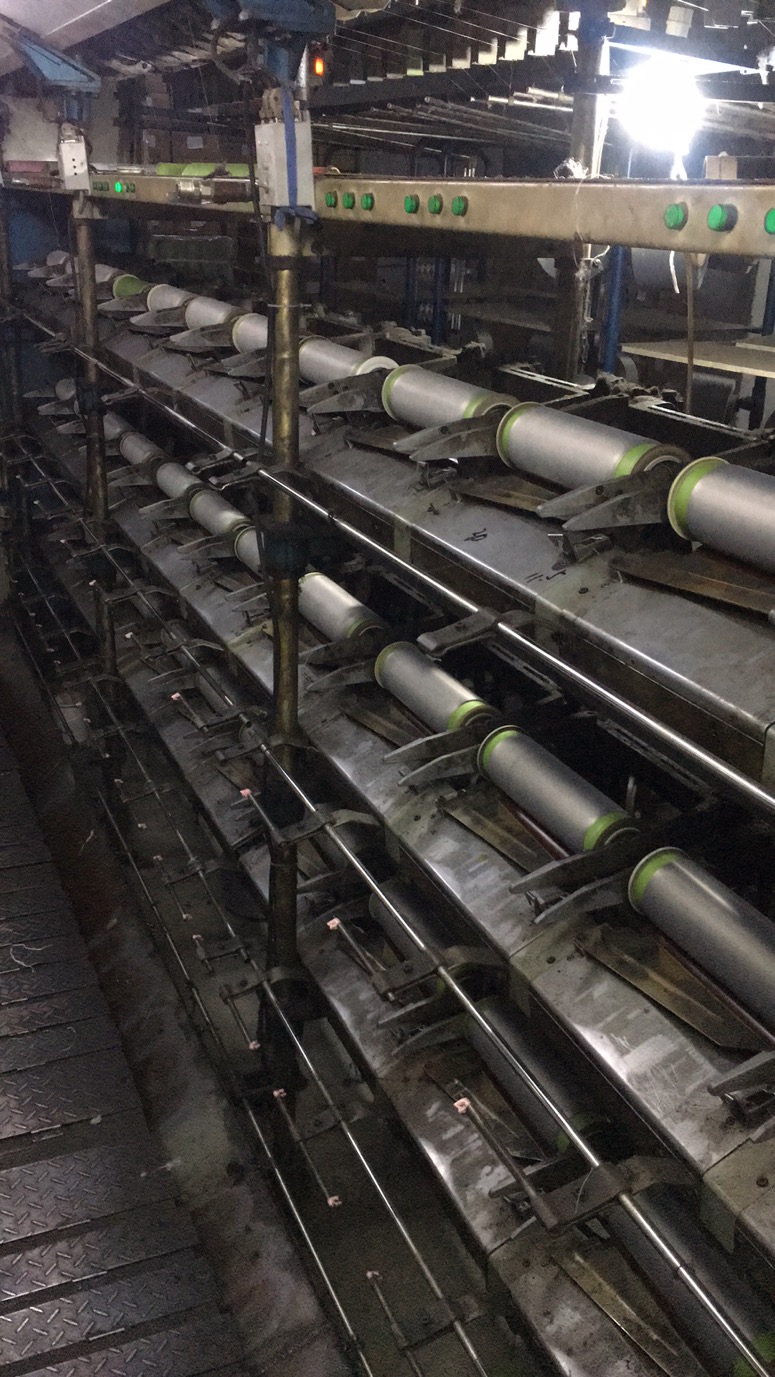
Facility view supporting composite and multi-function yarn development.
Compliance workload
Compliance workload is high because each function must be substantiated separately. A composite yarn that claims moisture management, antibacterial performance, and UV protection needs three evidence sets, not one combined statement. Restricted-substance screening also becomes more important as the number of additives increases. The buyer should request a TDS or MSDS where applicable and confirm that the test methods match the target market and the garment’s end use.
Sheath-Core Thermal/UV Barrier Route
Sheath-core thermal/UV barrier filament uses a bicomponent structure in which a functional additive is concentrated in one part of the filament. Smilytex’s Black Mirror® series is a sheath-core composite yarn containing 15% functional additive powder. Smilytex reports that Black Mirror® blocks UV rays with a UPF reaching above 1000 according to AATCC TM183-2020E testing, and describes the series as associated with heat insulation, anti-UV, and see-through resistance.
The route is aimed at garments where solar exposure, heat, or opacity is the primary concern: lightweight outdoor tops, sun-protection layers, and fabrics that must resist see-through without heavy lamination. The functional effect is structural, so the buyer should evaluate it at the fabric level, including color, cover factor, and finishing, not only at the yarn level.
Special production requirements
Production requirements include bicomponent spinning capability, additive dosing control, and a sheath-core cross-section that stays stable through drawing and texturing. The 15% additive loading is a starting specification, not a universal answer; the buyer should confirm the loading for the target fabric and the test result that supports the claimed UV and thermal performance.
UV claims need a defined test method. AATCC TM183-2020E is the method cited by Smilytex for the Black Mirror® UPF result, and the buyer should confirm that the test report covers the actual fabric construction and color to be produced. Because UV protection depends on fabric construction and color, a yarn-level result does not automatically transfer to every finished fabric.
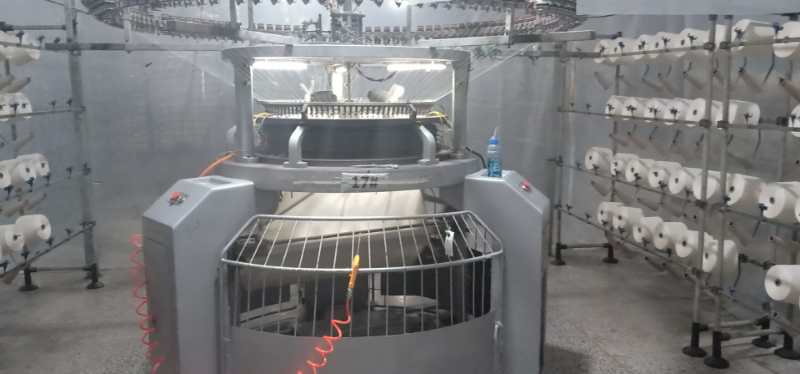
Production site supporting sheath-core and thermal/UV barrier filament programs.
Compliance workload
Compliance workload is moderate. The main claim is UV protection, supported by a recognized test method, plus any opacity or thermal claim the buyer intends to make. Thermal or heat-insulation claims need their own test basis; a UV report does not prove a thermal effect. Restricted-substance screening remains relevant because the additive is part of the yarn.
Side-by-Side Comparison
| Route | Primary functional role | Representative Smilytex reference | Key production requirement | Test / claim check | Equipment focus | Garment fit |
|---|---|---|---|---|---|---|
| Coffee charcoal antibacterial | Odor control, antibacterial, far-infrared, quick dry | Cocarber®; coffee charcoal antibacterial polyester filament | Carbonized coffee-ground masterbatch; dispersion and loading control | FIR per GB/T 30127-2013 or equivalent; antibacterial per ISO 20743/AATCC 100 as applicable; residue/safety screening | Carbonization and masterbatch compounding; FIR and antibacterial testing | Hygiene-sensitive apparel, base layers, odor-control activewear |
| Multi-functional composite | Two or more functions in one yarn system, such as moisture management plus odor control or UV | Smilytex multi-function portfolio; exact function set to be specified | Multi-additive or multi-component compatibility; dyeability and shade control | Separate evidence for each function; RSL screening; lab-dip approval | Multi-component spinning or masterbatch dosing; dyeing and multi-function testing | Activewear and athleisure where several functions are required |
| Sheath-core thermal/UV barrier | UV blocking, heat insulation, see-through resistance | Black Mirror® sheath-core composite yarn with 15% functional additive powder | Bicomponent sheath-core spinning; additive distribution; stable cross-section | UV per AATCC TM183-2020E as reported; opacity and thermal claims need their own method | Bicomponent spinning line; UV and opacity testing | Sun-protection layers, lightweight outdoor tops, opacity-critical fabrics |
The table is a screening aid, not a ranking. A route that looks stronger on one row can be weaker on another once the garment’s primary function and the buyer’s test capacity are taken into account.
Matching Each Route to Garment Applications
Smilytex’s application guidance groups functional polyester uses into activewear and athleisure, workwear and outdoor apparel, base layers and intimate apparel, and hygiene-sensitive apparel. Within that map, the three routes serve different briefs.
- Coffee charcoal antibacterial route: best fit where odor control and hygiene are the primary brief—base layers, intimate apparel, and hygiene-sensitive garments. Far-infrared and quick-dry effects are secondary benefits that still need their own test evidence.
- Multi-functional composite route: best fit where a single garment needs more than one function, such as activewear that requires moisture management and odor control, or outdoor apparel that requires UV protection and a soft handfeel. The buyer should limit the function list to what can be tested and documented.
- Sheath-core thermal/UV barrier route: best fit where UV, heat, or opacity is the dominant requirement—sun-protection layers, lightweight outdoor tops, and fabrics that must avoid see-through. The route is less suitable when odor control or antibacterial performance is the main brief.
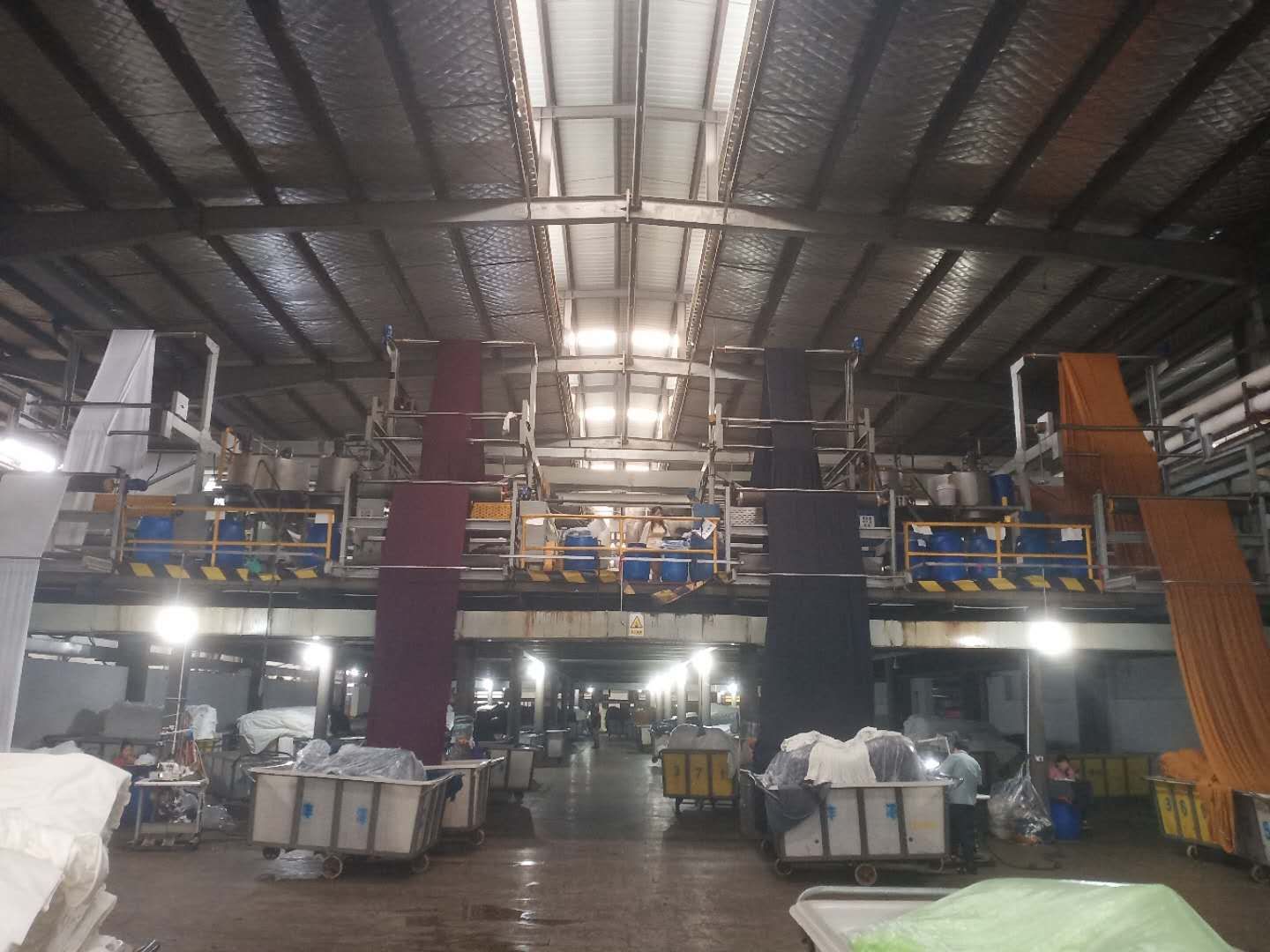
Factory operations supporting application-specific functional polyester filament development.
Step-by-Step Route Selection
- Write the garment brief as a ranked function list. Name the primary function, the secondary function, and the functions that are optional. This prevents a multi-function yarn from winning on features the garment does not need.
- Match the primary function to a route before comparing price. Odor control and hygiene point to coffee charcoal; several documented functions point to composite; UV, heat, or opacity point to sheath-core.
- Confirm the test standard and acceptance threshold for each claimed function. Agree on the method, the fabric construction, and the washing condition before sampling.
- Check production compatibility. Dyeing, heat-setting, brushing, coating, or lamination can affect handfeel, color, or performance, so the route should be checked against the intended finishing process.
- Request route-specific documentation. Ask for a TDS or MSDS where applicable, test reports, the masterbatch or additive specification, and batch traceability records.
- Run a controlled sample matrix. Use the same fabric construction and test method across the routes so the results are comparable, and keep retain samples.
- Compare total program cost. Include testing, compliance documentation, dyeing steps, sample iterations, and cycle time, not only the yarn quotation.
- Lock batch approval and corrective-action terms. Agree on a shading sheet, retain samples, and a CAPA process before bulk production.
Frequently Asked Questions
Which test standards should a buyer confirm for coffee charcoal far-infrared and antibacterial claims?
For far-infrared performance, confirm a report against GB/T 30127-2013 or an equivalent standard accepted in the target market. For antibacterial performance, confirm a recognized method such as ISO 20743 or AATCC 100, as applicable, with the test organism, contact time, and washing condition stated. The report should match the yarn and fabric construction to be supplied, not a generic reference fabric.
What production capability does a sheath-core thermal/UV barrier route require?
It requires bicomponent sheath-core spinning, controlled dosing of the functional additive, and a cross-section that remains stable through drawing and texturing. Smilytex’s Black Mirror® series uses a sheath-core composite yarn containing 15% functional additive powder, and Smilytex reports UV blocking with a UPF reaching above 1000 under AATCC TM183-2020E testing. Buyers should confirm the additive loading and the UV report for the actual fabric construction and color.
Why is yarn price a poor basis for comparing these three routes?
Because the routes carry different testing, compliance, dyeing, and equipment requirements. Functional polyester generally carries a premium over regular polyester that depends on the function, construction, and MOQ, and the three routes add different documentation and validation steps. A lower yarn price can be offset by additional test iterations, dyeing complexity, or compliance workload. The buyer should compare total program cost, not the yarn quotation alone.
How should a buyer structure sample validation across the three routes?
Use the same fabric construction, the same test method, and the same acceptance threshold for each route so the results are comparable. Test each claimed function separately, keep retain samples, and align the test standard with the supplier before bulk. For coffee charcoal, include far-infrared and antibacterial tests; for composite, test each function in the combination; for sheath-core, include UV and any opacity or thermal claim.
What manufacturing-cycle factors differ between the routes?
Coffee charcoal adds masterbatch preparation and residue/safety screening. Composite routes add multi-function validation and, where cationic dyeability is specified, lab-dip and shade-reproducibility steps. Sheath-core routes add bicomponent configuration trials and UV testing. All three routes also need a processing-compatibility check because heat-setting, brushing, coating, or lamination can affect handfeel, color, or performance. Buyers who need to compare cycle time should ask for a route-specific process flow and sample lead time rather than a single yarn lead time. Smilytex can support sample and quotation requests once the functional brief and test standards are defined.
Conclusion
The three routes are not ranked alternatives on a single scale. Coffee charcoal antibacterial filament is the better fit when odor control and hygiene lead the brief; multi-functional composite is the better fit when one garment needs several documented functions; sheath-core thermal/UV barrier is the better fit when UV, heat, or opacity is the dominant requirement. The decision should be locked by garment application, compliance burden, and manufacturing cycle, with yarn price treated as one input rather than the deciding variable.
Smilytex’s portfolio covers all three directions, and its published product families—Cocarber®, Black Mirror®, and the broader functional yarn range—give buyers a starting point for sample requests. The next step is to convert the garment brief into a test plan and a route-specific documentation request.
Next step: Compare route-specific samples against a defined function list and test standard. Smilytex can provide product information and a downloadable company brochure for buyers preparing a functional polyester filament inquiry.
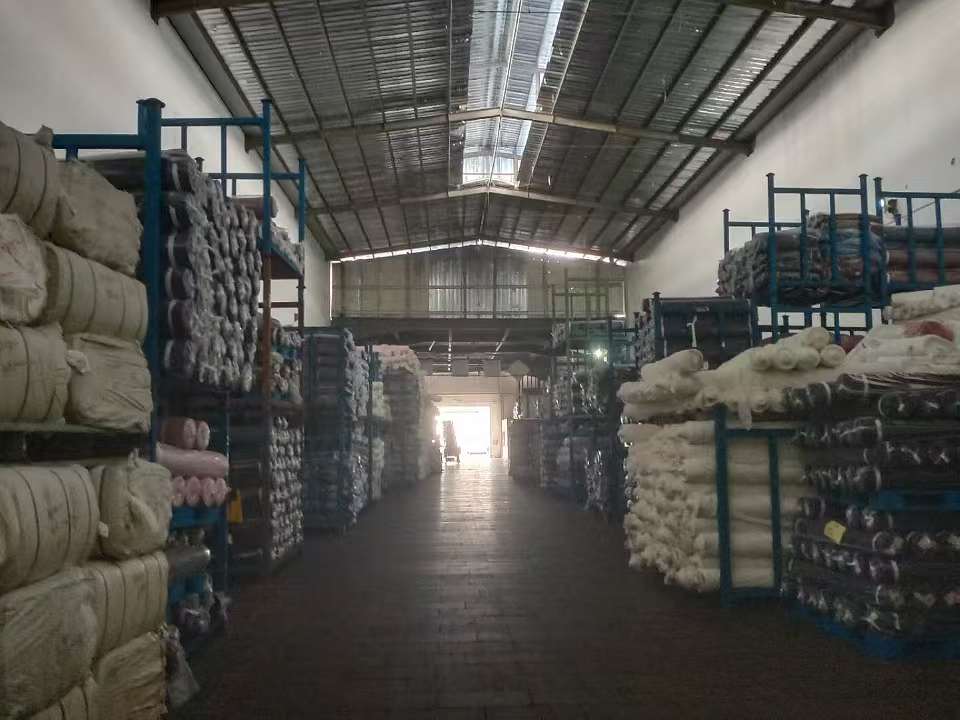
Smilytex facility supporting sample and quotation requests for functional polyester filament.
Have Questions or Need More Details?
Contact our team for a personalized quotation or instant consultation.
Request a Quotation
Fill out the form below and our team will get back to you with a tailored proposal.
WhatsApp Direct Chat
Prefer to chat in real-time? Message us on WhatsApp for instant assistance & quick answers.
- Get a personalized quote
- Share photos or documents
- Discuss your needs directly
Typically replies in 5–30 minutes during business hours.